
The Balinese long-tailed macaque is more than just a mischievous temple-side attraction—it is a highly intelligent and socially complex primate that has learned to adapt and thrive alongside humans. From their intricate social hierarchies to their famously clever thefts in places like Uluwatu, understanding their behavior is essential not only for appreciation but also for safety, especially considering the ongoing risk of rabies in Bali from animal bites or scratches. As a trusted Medical Clinic in Bali, Life Everyouth Bali helps visitors navigate these unique wildlife encounters with insight and caution, ensuring your time in Bali remains both fascinating and safe.
The Brains of the Balinese Temples: Understanding the Long-Tailed Macaque
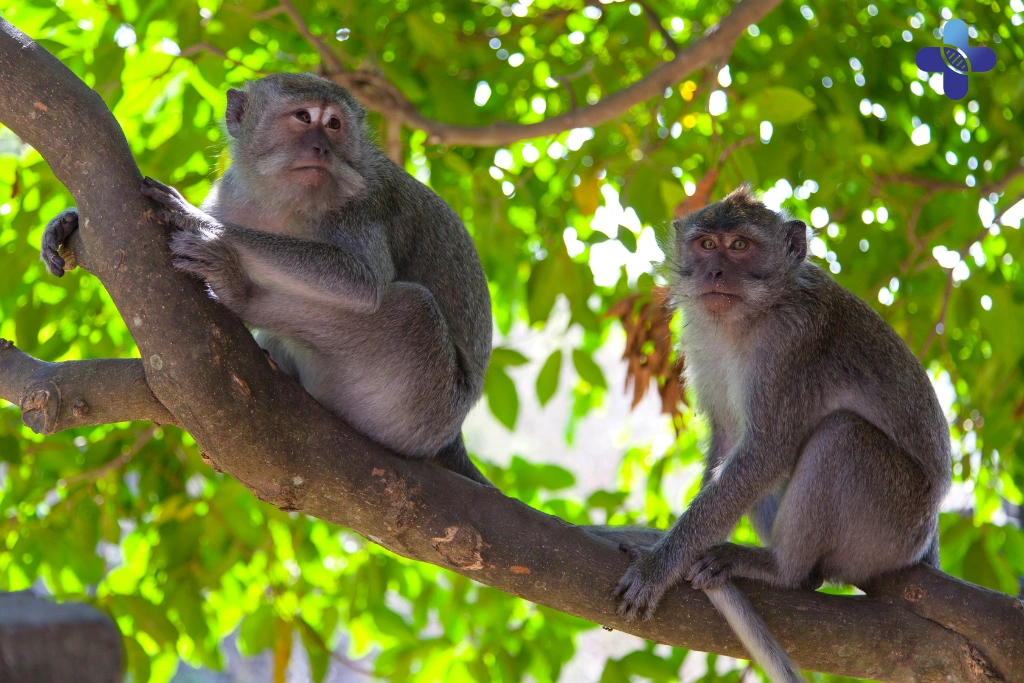
They are Bali’s most iconic, intelligent, and often infuriating residents. But behind the cheeky thefts and playful antics lies a complex social world that mirrors our own. The Balinese long-tailed macaque (Macaca fascicularis) is not merely a curious attraction—they are deeply social primates with intricate hierarchies, emotional intelligence, and cultural behaviors passed down across generations. From Ubud’s sacred Monkey Forest to the dramatic cliffs of Uluwatu, these monkeys have evolved alongside human visitors, often adapting in ways that are as brilliant as they are unpredictable.
In this guide, Life Everyouth Bali, a trusted authority in wildlife-related care and a leading Medical Clinic in Bali, takes you beyond tourist warnings and into the behavioral patterns of these fascinating creatures. Through understanding their body language, group dynamics, and survival instincts, we not only gain deeper appreciation but also learn how to avoid unsafe interactions. As a responsible traveler or nature enthusiast, knowing more about the Balinese long-tailed macaque helps ensure your safety, while also supporting the peaceful coexistence between humans and Bali’s most intelligent non-human inhabitants.
The Social Ladder: Understanding Macaque Hierarchy
A Balinese long-tailed macaque troop is not a random gathering but a highly structured society shaped by hierarchy, lineage, and social strategy. The alpha male holds his position through dominance and alliances, while females inherit rank through family lines passed from mother to daughter, determining access to food, space, and social privileges. At Life Everyouth Bali, a trusted Medical Clinic in Bali, we often remind travelers that this complex social order influences how macaques react to human presence, especially when visitors unknowingly step into their space.
Social grooming plays a central role in maintaining harmony within the troop, serving as a form of communication, trust-building, and political alignment rather than simple hygiene. What may look like casual behavior is actually a meaningful social exchange, and misreading these cues can lead to tension when humans approach too closely or challenge an alpha male with direct eye contact. As a leading Medical Clinic Bali, Life Everyouth Bali has assisted many visitors affected by these misunderstandings, reinforcing that recognizing macaque social rules can help prevent avoidable scratches or bites.
“Clever Thieves”: The Famous Bartering Monkeys of Uluwatu
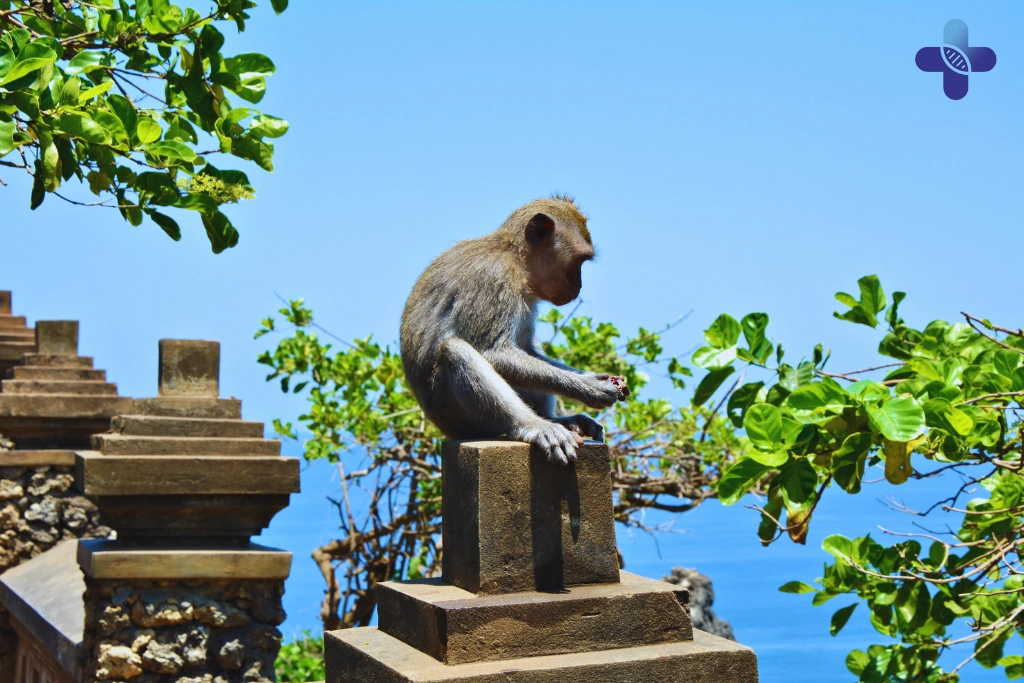
Perched on the cliffs of Uluwatu, where ocean meets temple stone, a troop of Balinese long-tailed macaques has mastered the art of bartering with humans. Known for snatching sunglasses, hats, sandals, and smartphones, these monkeys don’t simply steal—they wait, assess, and negotiate, holding items until food is offered in exchange. This learned behavior, passed down through generations, reflects a complex social intelligence that fascinates researchers and visitors alike, but it can also lead to monkey bites in Bali when tourists attempt to retrieve their belongings themselves.
While these encounters may seem entertaining, close interactions carry real risks if a macaque feels threatened or cornered. At Life Everyouth Bali, a trusted Medical Clinic in Bali, we often treat scratches and bite injuries resulting from poorly timed reactions. To stay safe, travelers are advised to avoid loose accessories and let local guides manage any interactions, allowing these remarkable animals to be admired from a respectful and safe distance.
Reading the Signs: A Guide to Monkey Body Language
To the unfamiliar eye, the Balinese long-tailed macaque may seem animated and entertaining—but every flick of the tail, every vocal outburst, and every tooth-baring grin is a deliberate form of communication. These monkeys don’t just react—they signal, warn, and negotiate through body language shaped by generations of survival. Misreading these signals can escalate a peaceful encounter into a dangerous one. That’s why at Life Everyouth Bali, a highly trusted Medical Clinic Bali, we emphasize education as much as treatment when it comes to monkey-related incidents.
The Yawn
When a macaque yawns, it’s rarely about being tired. It’s a calculated display of power—showing off large canines to intimidate or reaffirm rank. Especially among alpha males, this gesture serves as a clear message: I’m in charge—back off. If you happen to witness this while observing monkeys at temples or forest paths, the safest response is to lower your gaze and slowly step back. At Life Everyouth, a dependable Medical Clinic in Bali, we’ve treated travelers who unknowingly challenged this warning by standing their ground too long.
Showing Teeth (The “Smile”)
Many visitors make the mistake of smiling at macaques, assuming it shows friendliness. But in the primate world, a toothy smile—especially one with raised eyebrows—is a universal threat signal. Monkeys interpret it as a challenge, not a greeting. This miscommunication often triggers aggressive posturing or even lunges. At Life Everyouth Bali, as a responsive Bali Medical Clinic, we remind guests that keeping a neutral, relaxed expression is one of the most effective ways to de-escalate tension.
Specific Calls
Macaques don’t just speak with gestures—they also use an array of vocal cues. A low-pitched grunt may signal curiosity or reassurance, while sharp clicks often indicate mild agitation. High-pitched alarm calls, on the other hand, are a sign that a perceived threat is near—sometimes even you. Learning to listen can be just as important as learning to look. At Life Everyouth, we provide more than just care; as a proactive Medical Clinic Bali, we equip travelers with the knowledge to understand these warning signs and avoid unnecessary risks during their island adventure.
From Understanding to Safety: How to Coexist on Your Visit
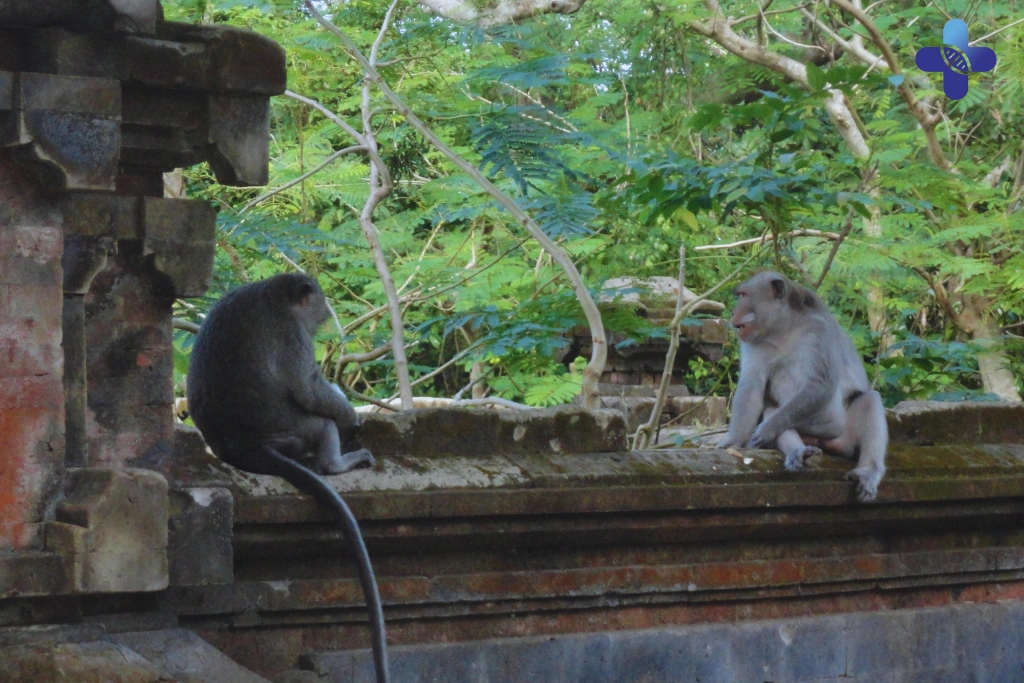
Understanding the Balinese long-tailed macaque means more than admiring their intelligence—it requires adjusting your own behavior to respect their social world. Simple actions like making eye contact, smiling, or carrying plastic bags can be misinterpreted as threats or invitations, especially within their strict hierarchy. That’s why following Ubud Monkey Forest safety tips and being mindful of your movements and belongings can make the difference between a calm encounter and an unexpected confrontation.
Guidelines such as avoiding food, limiting direct stares, and keeping a respectful distance are based on how macaques interpret social cues, not human intentions. At Life Everyouth Bali, a trusted Medical Clinic in Bali, we help travelers understand this primate-aware mindset to prevent avoidable injuries. Our goal is not only to treat bites or scratches, but to ensure your wildlife experiences in Bali remain safe, respectful, and truly enriching.
The Unfortunate Reality: When Interactions Go Wrong
Even the most cautious and well-informed visitors can find themselves in a tense moment with a Balinese long-tailed macaque, as these animals remain wild and unpredictable despite their familiarity with humans. A seemingly playful interaction can escalate quickly, especially if a tourist unknowingly challenges an alpha male or attempts to retrieve a stolen item. At Life Everyouth Bali, a frontline Medical Clinic in Bali, we have treated many travelers who were caught off guard by how fast curiosity can turn into confrontation, reinforcing the importance of taking every monkey encounter seriously.
We provide fast, safe, and complete rabies post-exposure care for visitors and residents alike, ensuring every patient receives prompt medical attention, clear guidance, and compassionate support. At Life Everyouth Bali, your safety is our top priority, with experienced doctors ready to assess your risk and begin treatment without delay. If you want to protect yourself after an animal bite or scratch, we strongly recommend booking a rabies vaccine in Bali at Life Everyouth Bali and exploring our full rabies care protocol to take the right step after any macaque-related incident.
Conclusion The Balinese Macaque: A Guide to Monkey Behaviour & Safety
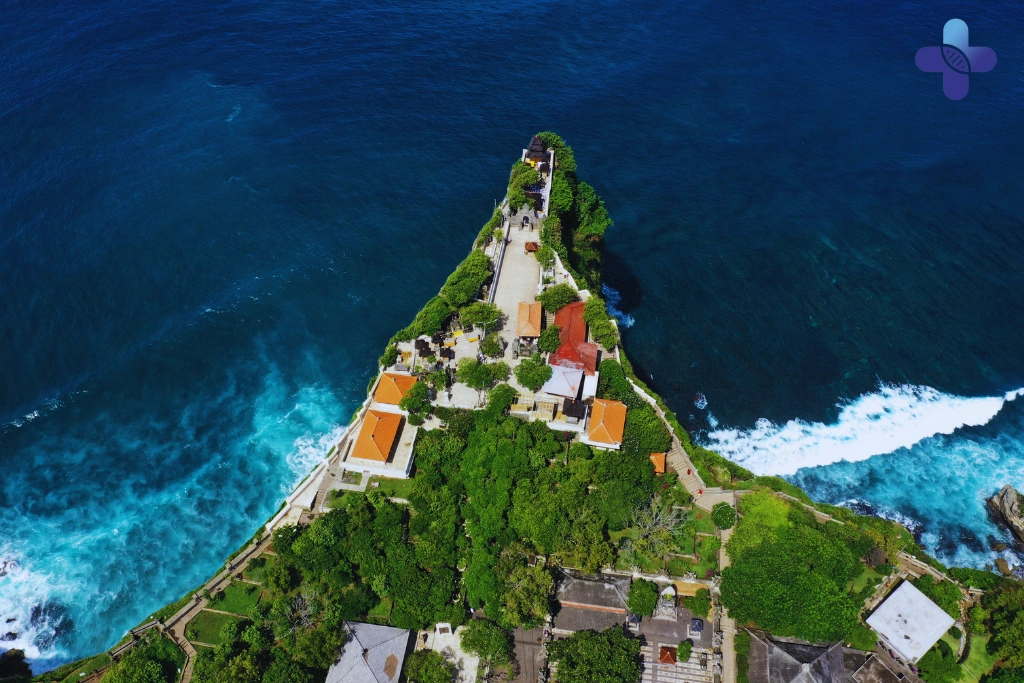
By learning to read the behaviors of the Balinese long-tailed macaque, we move beyond surface-level curiosity into meaningful understanding. What once felt like unpredictable chaos becomes an intricate social system—one that deserves both respect and caution. With the right knowledge, travelers can turn risky encounters into moments of awe, protecting both themselves and the macaques from unnecessary harm.
At Life Everyouth Bali, we believe that education is the first line of defense—just as essential as any vaccine. As a leading Medical Clinic in Bali, we’re here not only to treat injuries but to help prevent them through awareness. Whether you’re walking through Ubud’s Monkey Forest or gazing over the cliffs of Uluwatu, let Life Everyouth, your trusted Medical Clinic Bali, be your partner in safe, informed, and respectful exploration of Bali’s wild side.
Frequently Asked Questions The Balinese Macaque: A Guide to Monkey Behaviour & Safety
Why do the monkeys groom each other so much?
Social grooming among Balinese long-tailed macaques is far more than a hygiene ritual. It’s a deeply ingrained social behavior that reinforces alliances, establishes trust, and maintains harmony within the troop. Grooming is often exchanged strategically—lower-ranking macaques groom higher-ranking individuals to show respect or gain favor, while close allies groom one another to strengthen their bond. At Life Everyouth Bali, a trusted Medical Clinic in Bali, we help visitors understand that when they see monkeys grooming, they’re witnessing a complex form of social diplomacy—one that helps prevent internal conflict and stabilizes their society.
Are the alpha males aggressive?
The alpha male in a macaque troop carries the responsibility of protecting the group and maintaining order, which can often mean displaying assertive or aggressive behaviors. This dominance is reinforced through body language, vocalization, and sometimes confrontation. While aggression is not constant, it can be triggered if the alpha perceives a threat to his status—such as a direct stare or sudden approach by a human. At Life Everyouth, your reliable Medical Clinic Bali, we frequently treat injuries caused by unintentional challenges to an alpha male’s authority, emphasizing that respectful distance is key to safe coexistence.
Why do monkeys seem to target women and children more?
Monkeys are incredibly perceptive and opportunistic. They tend to assess risk before acting, and often view women and children as less threatening than adult males. This perception makes them more likely to approach or attempt to snatch items from these individuals. Clothing, bags, or accessories commonly worn by women and children may also appear more colorful or interesting to macaques. At Life Everyouth Bali, we’ve seen how this pattern plays out repeatedly, which is why our Medical Clinic in Bali provides not just treatment—but also preventive education—especially for families visiting monkey-populated areas.
How can they be so gentle with their babies but rough with tourists?
Within their troop, Balinese long-tailed macaques form strong familial bonds. Mothers are extremely protective and nurturing toward their infants, often carrying, grooming, and even playfully teaching them. However, when it comes to humans—whom they view as outsiders—this gentleness disappears. Tourists may unknowingly approach too closely or appear threatening, prompting defensive reactions. At Life Everyouth, a Medical Clinic Bali familiar with wildlife-related injuries, we remind visitors that these contrasting behaviors are rooted in social instinct: protect the in-group, defend against the unknown.
What do the monkeys eat naturally, besides bananas from tourists?
While tourists often feed them bananas, the natural diet of a Balinese long-tailed macaque is surprisingly diverse. In the wild, they consume fruits, seeds, leaves, flowers, insects, small crabs, and even lizards. These food sources provide a range of nutrients essential to their health—unlike sugary snacks that can cause long-term digestive issues. At Life Everyouth Bali, a preventive-oriented Medical Clinic in Bali, we advise against feeding monkeys anything outside their natural diet, not only for your safety but also to protect the monkeys’ health and natural foraging behaviors.
Are the monkeys in Sangeh Monkey Forest different from those at Uluwatu?
Genetically, they are the same species—Balinese long-tailed macaques—but their behavior varies based on location and learned culture. For example, Uluwatu macaques are famous for their bartering behavior, where they steal items and trade them for food. In contrast, the monkeys at Sangeh tend to be less aggressive and exhibit different social dynamics. These differences stem from environmental factors and human interactions over time. At Life Everyouth, a culturally aware Medical Clinic Bali, we encourage travelers to learn about local monkey behavior in each area to better anticipate their actions and stay safe.
How long do these macaques live?
In the wild, Balinese long-tailed macaques typically live between 15 and 20 years, depending on factors like diet, habitat stability, and absence of disease. In protected environments, their lifespan may extend slightly due to reduced threats. However, injuries from territorial disputes or human interactions can shorten this life expectancy. At Life Everyouth Bali, a responsive Medical Clinic in Bali, we understand the importance of respectful interaction with wildlife—not just for your health, but for theirs as well.
Why do some monkeys carry rocks or bottles around like babies?
This behavior, though not fully understood, is thought to be a form of play or emotional expression—particularly among younger female macaques. Some scientists suggest it’s a kind of play-mothering, where a juvenile practices caregiving behaviors before becoming a mother. Others believe it may help relieve stress or serve as a form of exploration. At Life Everyouth, your observant Medical Clinic Bali, we often remind visitors that macaques, like humans, show complex behaviors that reflect their intelligence and emotional depth.
Why do they steal plastic bags?
Over time, Balinese long-tailed macaques have learned to associate plastic bags, food wrappers, and water bottles with human snacks. They don’t necessarily know what’s inside—but they’ve learned that these items often contain something edible. This behavior, while clever, poses health risks to the animals and often leads to human-monkey conflict. At Life Everyouth Bali, a community-minded Medical Clinic in Bali, we advocate for not carrying visible packaging in monkey zones and securing belongings to reduce temptation and potential harm.
Why is it important not to smile at them?
In human culture, a smile is a sign of friendliness—but in macaque society, showing teeth is a universal threat. When a person smiles at a monkey, especially while making eye contact, it can be perceived as a challenge to dominance. This often results in a defensive or even aggressive response. At Life Everyouth, a safety-first Medical Clinic Bali, we teach travelers to keep their expressions neutral and avoid behaviors that might be misread. Understanding these differences in communication is key to a safe and enriching experience in macaque territory.
