
Unexpected skin concerns can affect a traveler’s comfort, confidence, and ability to enjoy planned activities. Access to a qualified dermatologist in Bali – such as the specialist team at Life Everyouth – can provide an appropriate first point of specialist assessment when a skin issue needs professional guidance during a stay.
Dermatologist in Bali: What Travelers Should Know

A skin concern during a holiday does not always require emergency treatment. Some reactions settle with rest and basic care. Others need a physical examination or a personalized treatment plan.
A dermatologist, known locally as Sp.KK, is a specialist trained specifically in skin, hair, and nail conditions – not a general practitioner. For travelers away from their usual doctor, that specialist assessment can also help clarify unfamiliar healthcare options.
This guide explains what a dermatologist does, which conditions may be assessed, what happens during a consultation, and when a symptom needs more urgent attention.
What Does a Dermatologist Do?
A dermatologist provides specialist assessment for skin, hair, and nail conditions. Unlike a general practitioner, a dermatologist typically uses tools such as dermoscopy to examine skin more closely than the naked eye allows.
The doctor may review symptoms, examine the affected area, evaluate relevant history, recommend treatment, prescribe medication when appropriate, and determine whether further testing or referral is needed.
Skin type, allergies, existing conditions, recent products used, and sun exposure can all influence the assessment. A dermatologist may also assist with aesthetic concerns or preventive checks such as a mole review.
Dermatology care is not a substitute for an emergency department. Severe or potentially life-threatening reactions require a higher level of assessment.
Why Travelers in Bali May Need a Dermatologist
Travel can temporarily change sun exposure, humidity, skincare products, and daily routine – all of which can affect the skin. Bali’s climate specifically plays a role here; see why Bali’s tropical climate is tougher on skin for the full picture.
Some travelers develop breakouts shortly after arriving. Others notice sunburn that seems worse than expected, a persistent rash, unexpected dark spots, or a mole that looks different from how they remember it.
A few everyday habits can quietly make things worse too – see everyday habits damaging your skin in Bali for simple fixes.
Tourists, expats, families, and long-stay visitors can have very different skin concerns. A dermatologist helps determine whether an issue needs simple adjustments or a focused treatment plan.
Conditions a Dermatologist in Bali May Assess
Common Skin Concerns During a Stay in Bali
- Breakouts, active acne, and acne scarring
- Sunburn and other tropical skin conditions, including heat rash and fungal infections
- Persistent rashes, eczema, or allergic reactions
- Dark spots or noticeable pigmentation changes
- A new or changing mole or spot
- Skin that feels unusually sensitive or reactive
- Aesthetic concerns such as fine lines or volume loss
This list does not provide a diagnosis. Similar symptoms can have different causes, so the right treatment varies between patients.
Acne, Breakouts, and Skin Congestion in Bali
A sudden increase in breakouts is one of the most common reasons travelers seek a dermatologist in Bali. Humidity, sweat, and new skincare products can all increase oil production and clog pores more easily than at home.
A dermatologist can assess whether breakouts will likely settle with basic care, or whether active treatment would help. Travelers noticing ongoing breakouts can read more in skin breakouts in Bali.
Breakouts that are painful, spreading, or swollen should be assessed rather than treated with repeated over-the-counter products alone.
Sunburn and Heat-Related Skin Damage
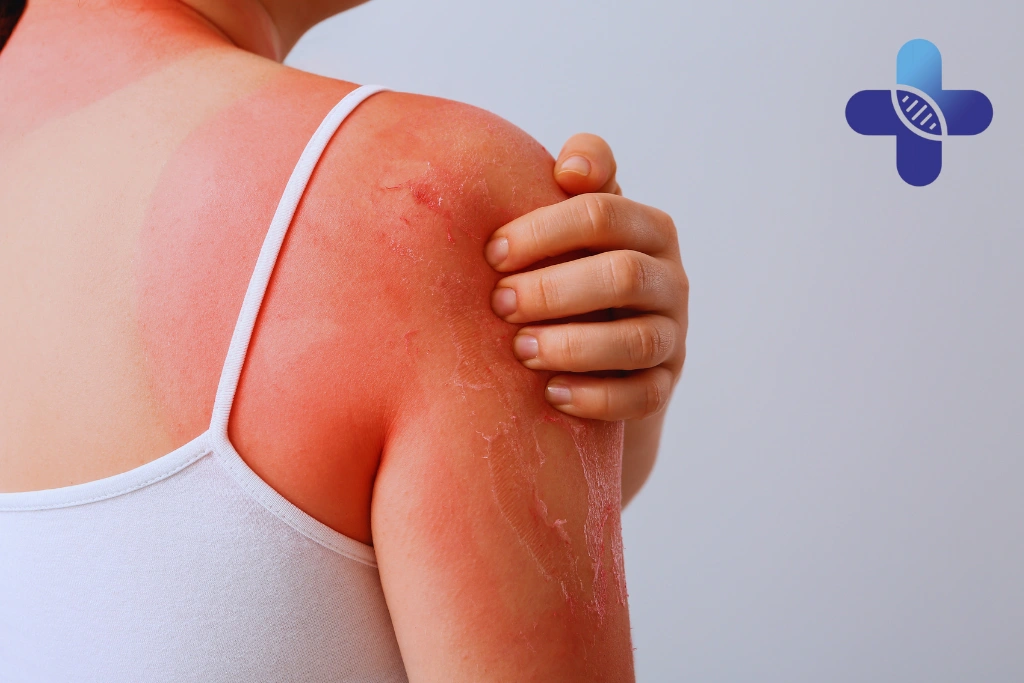
Visitors often underestimate the intensity of sun exposure while walking, swimming, or relaxing at the beach in Bali. Mild sunburn causes warmth and redness. More extensive burns can involve blistering, swelling, or difficulty maintaining normal fluid intake.
A dermatologist can assess the severity and determine whether wound care, medication, or further evaluation is appropriate. Travelers with sunburn that isn’t healing as expected can review sunburn that won’t heal.
A day at the beach is often where this starts – see the hidden cost of sun, salt, and sweat on your skin for prevention tips.
Confusion, fainting, severe weakness, or difficulty drinking should not be treated as a minor skin concern.
Rashes, Heat Bumps, and Allergic Skin Reactions
Bali’s warm, humid environment can expose skin to sunlight, seawater, sweat, insects, and unfamiliar products. A rash may appear as redness, itching, small bumps, or localized irritation.
Travelers noticing ongoing irritation can read more in persistent rashes and heat bumps.
Facial swelling, breathing difficulty, or a rapidly spreading reaction requires emergency assistance rather than a routine consultation.
Dark Spots and Pigmentation Changes
New dark spots or patches of pigmentation are common after sun exposure, but not every spot is simply cosmetic. This is usually the result of exposure building up over time – see how humidity and sun exposure affect your skin over time for more context.
A dermatologist can distinguish ordinary sun-related pigmentation from a change that needs closer monitoring. More detail is available in dark spots and sun damage.
A spot that is rapidly darkening or changing in texture should be assessed rather than monitored indefinitely.
Moles, Spots, and Skin Cancer Checks
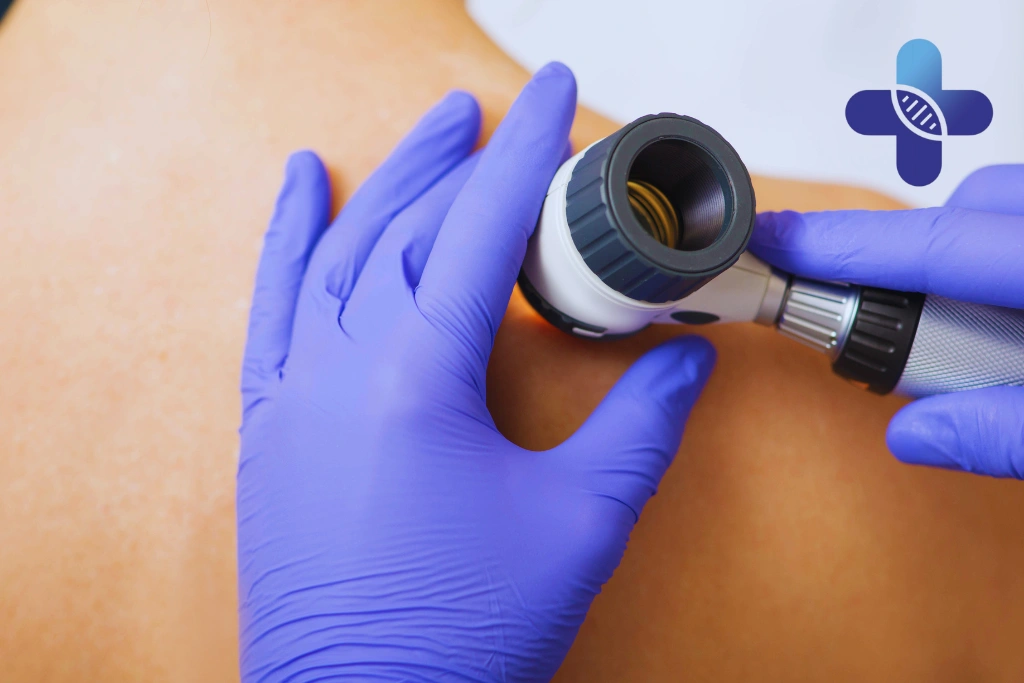
A new or changing mole can be unsettling, especially away from your usual doctor. A dermatologist can examine a mole using dermoscopy and advise whether monitoring, testing, or removal may be appropriate.
Read new mole or spot: skin cancer signs for a plain-language explanation of what’s worth a closer look.
For travelers who’d rather check proactively, skin cancer and mole checks can be booked as routine screening rather than waiting for a symptom.
A mole that is asymmetric, has an irregular border, uneven color, or is growing should be assessed by a specialist rather than left unchecked.
Sensitive and Reactive Skin
Some travelers notice their skin becomes more reactive shortly after arriving, even without an obvious trigger. Heat, humidity, and new products can all disrupt the skin barrier.
More on this is available in why skin feels more sensitive in Bali. Persistent sensitivity that doesn’t improve with a simplified routine is worth a proper assessment.
Aesthetic Concerns: Botox and Fillers
Not every visit is about an active skin problem. Some travelers use time in Bali to address aesthetic concerns such as fine lines or volume loss.
Botox and fillers should only be performed by a certified specialist, in a sterile clinical setting, with realistic expectations set before treatment begins.
When a Dermatologist Consultation May Be Appropriate
A consultation may help when a skin symptom doesn’t improve as expected, or begins to affect daily comfort or confidence.
Changes That May Need a Skin Assessment
- A symptom that continues longer than expected
- Increasing pain, redness, or swelling
- A rash or wound that becomes worse
- A mole or spot that changes in size, shape, or color
- Skin reactions that return after temporary improvement
Unsure if a symptom warrants a visit? Review when skin problems need a doctor, not just home remedies.
When a Dermatologist Is Not the Right Level of Care
A dermatology consultation suits many non-emergency concerns, but some symptoms need urgent hospital assessment instead.
Warning Signs That Require Emergency Attention
- Facial swelling or difficulty breathing
- Signs of a severe allergic reaction
- Rapidly spreading infection with fever
- Confusion, fainting, or extreme weakness
- Deep wounds, severe pain, or possible fracture
- An animal bite or scratch
A routine consultation should not delay emergency care. Travelers with these warning signs should contact local emergency services or go to the nearest hospital.
What Happens During a Dermatology Consultation in Bali
A consultation starts with a private conversation about the main concern, when it began, and relevant history – allergies, existing conditions, products used, and recent sun exposure.
The physical exam depends on the concern, and may include dermoscopy for a closer look at a spot or mole. Afterward, the dermatologist explains the likely cause and recommends a personalized treatment plan, prescribing medication when appropriate.
What Travelers Should Prepare Before Seeing a Dermatologist
Be ready to explain when the symptom started, what may have triggered it, and what’s already been tried. Photos of the affected area over time are especially helpful for a rash, spot, or mole.
Also mention known allergies, current medications, and travel insurance details if applicable.
Dermatologist or General Practitioner: Which Is More Suitable?
A dermatologist is usually the right starting point for a skin concern specifically, since the tools and training involved are more specialized.
A general practitioner may suit urgent, after-hours situations where a villa visit is more practical. Doctor on call can help there, though it isn’t a substitute for specialist evaluation – see how an urgent skin concern was handled for a real example of how that works in practice.
Skin Care for Different Types of Travelers
First-Time Visitors
Skin changes often appear within the first few days simply from the shift in climate. See what your skin experiences on a first visit to Bali to set realistic expectations.
Expats and Long-Stay Visitors
Cumulative sun exposure works differently over months than days. More in expat skin health in Sanur and Jimbaran.
Families and Couples
Parents should watch for scratching or a spreading rash in children. For couples, convenience shouldn’t replace a proper assessment of anything out of the ordinary.
Visiting the Clinic and Booking a Consultation
Life Everyouth Bali’s dermatologist is available by appointment at two clinics, both open 24 hours: Sanur (Jl. Danau Toba No.10b, serving Mertasari and Sindhu Beach areas) and Jimbaran (Jl. Uluwatu II No.10X, serving Ungasan, Pecatu, and Benoa).
Consultation fees differ from a general practitioner visit and are explained before proceeding. Most major travel insurance policies are accepted, with a written medical report provided after your visit.
For a closer look at what to check before booking anywhere, see how to find a trusted dermatologist in Bali.
Ready to see a dermatologist in Bali? Visit the dermatologist in Bali page to book, or message Life Everyouth’s clinic directly on WhatsApp: +62 858-8788-8911. Include your name, age, location, main concern, and when it started.
Conclusion – Dermatologist in Bali for Travelers

A dermatologist can provide an appropriate first point of specialist assessment for many non-emergency skin concerns experienced by travelers in Bali.
Dermatology care has limits. Facial swelling, difficulty breathing, or a rapidly worsening condition require urgent hospital assessment rather than a routine consultation.
Frequently Asked Questions – Dermatologist in Bali for Travelers
What does a dermatologist in Bali do?
A dermatologist provides specialist assessment for skin, hair, and nail conditions, often using dermoscopy, and can recommend treatment or refer for further testing when necessary.
What skin concerns can a dermatologist assess in Bali?
Breakouts, sunburn, persistent rashes, dark spots, sensitive skin, and new or changing moles, as well as aesthetic concerns such as Botox and fillers.
When should a traveler see a dermatologist in Bali?
When a symptom persists, worsens, interferes with daily comfort, or involves a mole or spot that’s changing.
Can a dermatologist prescribe medication in Bali?
Yes, when medically appropriate, depending on the condition, allergies, and examination findings.
Can a dermatologist check a mole for skin cancer signs?
Yes, using dermoscopy, with advice on monitoring, further testing, or removal if appropriate.
Can I find an English-speaking dermatologist in Bali?
English-language consultation may be available – confirm before attending, as availability should be checked directly with the clinic.
What should I bring to a dermatologist appointment?
A symptom timeline, photos of the affected area, known allergies, and insurance documents if applicable.
How much does a dermatologist consultation cost in Bali?
Fees differ from a general practitioner visit and depend on treatment needed – request current pricing directly from the clinic.
Are Botox and fillers available from a dermatologist in Bali?
Yes, when performed by a certified specialist in a sterile clinical setting, aimed at safe, natural-looking results.
Does Life Everyouth Bali provide dermatologist consultations?
Yes – contact the clinic to confirm availability, fees, location, language options, and the conditions that may be assessed.
