
Sanur has become one of Bali’s most popular hubs for digital nomads, with its calm cafés, beachfront coworking spaces, and reliable lifestyle infrastructure. Yet many remote workers report flu-like symptoms during their first week—ranging from fatigue and sinus pressure to mild headaches and throat irritation. These patterns are increasingly associated with Bali flu in digital nomads and broader cases of flu in Bali, a condition Life Everyouth Bali frequently evaluates among newcomers adjusting to tropical work-life demands.
If you haven’t explored our previous article on Bali flu night symptoms, read it to understand how nighttime humidity and temperature changes intensify flu-like discomfort for travelers.
Why Digital Nomads in Sanur Are Reporting More Cases of “Bali Flu”
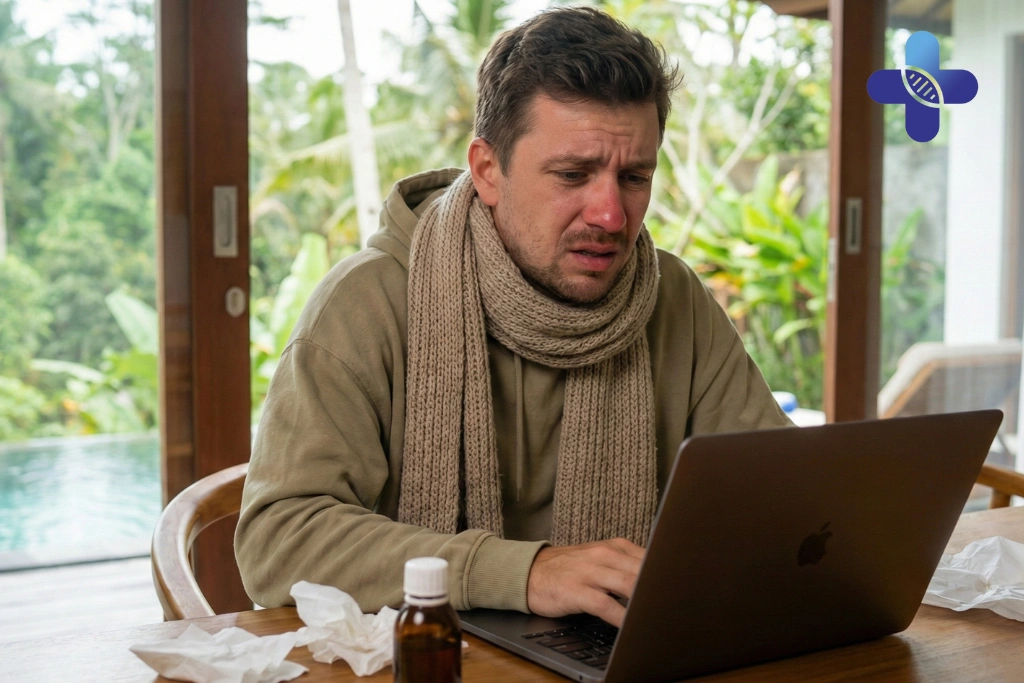
Digital nomads often underestimate how lifestyle habits, temperature exposure, and long screen hours impact their immune system when transitioning into Bali’s climate. Combined with Sanur’s humid coastline and AC-heavy work culture, these factors make Bali flu in digital nomads increasingly common. Life Everyouth Bali, as a trusted Medical Clinic Bali, provides ongoing support for nomads experiencing these symptoms while trying to maintain productivity.
Lifestyle Factors That Increase Flu Risk Among Digital Nomads
Moving Constantly Between AC and Outdoor Heat
Sanur’s nomad lifestyle involves working in cold coworking spaces and then stepping into hot, humid air. Life Everyouth Bali notes that this rapid temperature switching can strain the respiratory system and increase vulnerability to Bali flu in digital nomads.
Long Working Hours Reducing Sleep and Immune Resilience
Extended laptop sessions, late-night deadlines, and irregular sleep cycles weaken immune defenses. This pattern strongly correlates with early Bali flu in digital nomads, especially during the adjustment period.
High Mental Load Affecting Stress Hormones and Body Defenses
Mental pressure from remote work—client calls, deadlines, multitasking—raises cortisol levels, which suppresses immunity. This physiological stress makes flu-like symptoms more likely.
Environmental Exposures Unique to Sanur’s Digital Nomad Scene
Coworking Spaces With Recirculated Air Increasing Transmission Risk
As a Bali Medical Clinic, Life Everyouth Bali often treats nomads exposed to recirculated indoor air where viruses spread more easily. Poor ventilation increases the chance of shared flu symptoms.
Café-to-Beach Temperature Shifts Throughout the Day
Digital nomads frequently hop between cafés, coworking spaces, and the beach. These transitions expose them to:
- Hot outdoor air
- Cold indoor air
- Salt-heavy beachfront breeze
Such fluctuations can trigger sinus irritation and fatigue.
Night Humidity Causing Sinus Sensitivity for New Arrivals
Sanur’s nighttime humidity is higher than many expect. This worsens Bali flu in digital nomads, especially for newcomers adjusting from dry climates.
Why Long-Stay Nomads Are More Prone Than Short-Term Tourists
The longer nomads stay, the more they accumulate exposure to:
- AC dryness
- Tropical humidity
- Inconsistent sleep
- Café/coworking air environments
These layered stressors increase flu risk over time.
Symptoms Digital Nomads Commonly Mistake for “Just Tiredness”

Afternoon Brain Fog, Low Energy, and Runny Nose
Life Everyouth Bali routinely sees digital nomads dismiss early symptoms as fatigue or overwork. These subtle signs may indicate environmental stress or early flu development.
When Mild Symptoms Reveal Early Bali Flu in Digital Nomads
Symptoms can escalate when ignored, forming clearer patterns of Bali flu in digital nomads, especially when combined with humidity-driven sinus pressure or sleep disruption.
How Digital Nomads Can Reduce Their Flu Risk in Sanur
Workspace, AC, and Hydration Adjustments Recommended by Life Everyouth Bali
Nomads can reduce Bali flu in digital nomads by managing their daily environment. Helpful adjustments include:
- Keeping AC on moderate settings
- Taking short breaks from screens every 60–90 minutes
- Increasing electrolytes to counter humidity
- Working near natural airflow when possible
When Nomads Should Seek Medical Help in Bali
Symptoms That Signal You Shouldn’t Keep Working Through It
According to a Medical Clinic in Bali, nomads should seek care if they experience:
- Persistent fever
- Worsening headaches
- Severe fatigue
- Tight chest or breathing difficulty
Why Some Nomads Decline Quickly Under Tropical Stress and Overwork
Overworking while adapting to Bali’s climate can compound dehydration, immune suppression, and heat stress—leading to faster symptom escalation.
How Doctor on Call Life Everyouth Bali Fits Nomads’ Busy Schedules
Doctor on Call Life Everyouth Bali provides flexible, hotel-side care for remote workers who can’t leave their workspace or are too unwell to travel.
For fast, dependable medical support in Sanur, contact Doctor on Call Life Everyouth Bali for immediate care wherever you’re staying.
Conclusion Bali Flu in Digital Nomads: Why Sanur Cases Rise

Digital nomads in Sanur experience higher risk of Bali flu in digital nomads due to lifestyle habits, temperature changes, and humidity exposure. Recognizing early symptoms and adjusting work habits dramatically improves adaptation and prevents escalation. With proper support, nomads can enjoy Sanur’s thriving remote-work culture safely. For fast, reliable assistance, contact Doctor on Call Life Everyouth Bali for immediate care tailored to the needs of busy digital nomads.
Continue to our next article on allergy vs Bali flu symptoms to learn how to distinguish environmental reactions from true flu indicators.
Frequently Asked Question (FAQ) Bali Flu in Digital Nomads: Why Sanur Cases Rise
Why are digital nomads more prone to Bali flu in Sanur?
Lifestyle patterns such as AC exposure, long screen hours, and inconsistent sleep weaken immunity. Life Everyouth Bali sees these factors frequently contribute to Bali flu in digital nomads.
Do coworking spaces increase flu transmission in Bali?
Yes. Recirculated indoor air elevates the risk of shared respiratory symptoms. Life Everyouth Bali, as a Bali Medical Clinic, often treats nomads exposed in these environments.
What early symptoms should nomads pay attention to?
Mild congestion, sinus pressure, headaches, and fatigue are early Bali flu in digital nomads signs. These often appear within days of arrival.
Does screen fatigue worsen Bali flu in digital nomads?
Yes. Screen overuse contributes to dehydration, eye strain, and poor posture, making symptoms more noticeable.
How does humidity affect nomads differently than tourists?
Nomads spend longer hours indoors and outdoors, making them more exposed to humidity shifts in Sanur. Life Everyouth Bali often sees symptoms intensify for long-stay workers.
When should nomads visit a Medical Clinic in Bali?
If symptoms escalate after 48 hours, involve fever, or interfere with work, visiting a Medical Clinic in Bali is recommended.
Can lack of sleep increase flu risk?
Absolutely. Poor sleep reduces immune efficiency, making Bali flu in digital nomads more likely.
Are nomads more affected by temperature switching (AC ⇄ outdoor)?
Yes. Rapid transitions weaken respiratory defenses, leading to sinus issues and headaches.
How can nomads maintain immune strength while working long hours?
Stay hydrated, moderate AC, take outdoor breaks, and get enough rest. Life Everyouth Bali emphasizes these steps for preventing Bali flu in digital nomads.
Can Doctor on Call Life Everyouth Bali diagnose symptoms remotely?
Yes. Remote triage and hotel-side checkups help nomads receive fast care without leaving their workspace.
