
Many travelers arrive in Sanur feeling mild chills they often blame on hotel AC or nighttime breeze, unaware that the tropical environment can influence temperature regulation more than expected. These subtle chills may appear during the first 24–48 hours and are often early signals the body is reacting to Bali’s humidity and climate shift. For many visitors, these sensations represent Bali flu early warning signs and early patterns associated with flu in Bali, which Life Everyouth Bali frequently evaluates in newly arrived tourists.
If you haven’t read our previous guide on allergy vs Bali flu symptoms, be sure to explore it so you can better distinguish environmental reactions from early flu indicators.
Why Mild Body Chills in Bali Shouldn’t Be Ignored by Travelers
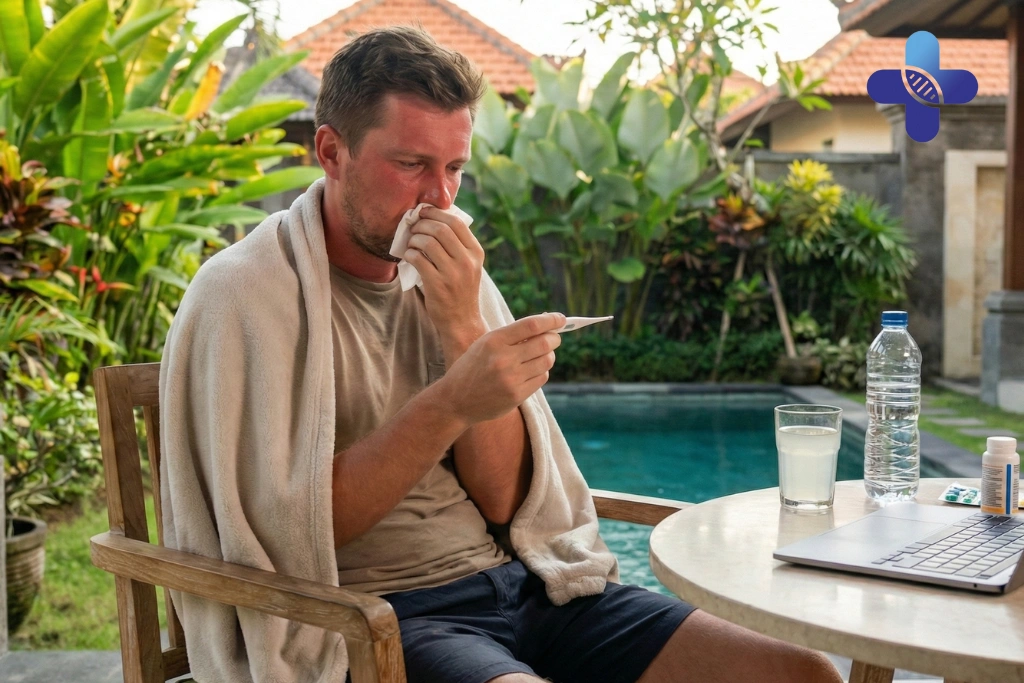
Sanur attracts visitors seeking a calmer, more relaxing atmosphere—yet many are surprised when they experience light chills despite Bali’s warm weather. These chills are often dismissed as AC exposure or tiredness, but for some travelers they may represent the earliest stage of Bali flu early warning signs. Life Everyouth Bali, as a trusted Bali Medical Clinic, helps travelers understand when chills require attention.
Why Body Chills Are Common Among Tourists in Bali
How Sanur’s Humidity and Breeze Trigger Temperature Sensitivity
Sanur’s humid air and steady beachfront breeze can make the body lose heat faster than expected, especially in travelers who just arrived from cooler climates. Life Everyouth Bali often notes that new arrivals experience mild chills due to shifting temperature regulation and fluid balance.
Why Chills Occur Even When the Weather Feels Warm
Although Bali is hot, humidity affects evaporation and internal cooling. These early disturbances in temperature control may reflect Bali flu early warning signs, particularly when chills appear without AC exposure.
When Mild Chills Signal the Beginning of Bali Flu
Early Physiological Changes That Lead to Bali Flu Symptoms
As the immune system adapts to Bali’s tropical environment, inflammation and viral exposure can create internal temperature drops. Life Everyouth Bali, a trusted Medical Clinic in Bali, observes chills as one of the earliest physiological responses before other flu symptoms appear.
Pattern Differences Between Normal Cold Exposure and Flu Chills
Normal chills from AC resolve quickly, while Bali flu early warning signs typically follow patterns such as:
- Chills that appear even in warm environments
- Discomfort lasting more than 30–60 minutes
- Chills accompanied by light fatigue or sinus sensitivity
Why Travelers Often Miss These Subtle Indicators
Visitors assume Bali is always hot, so chills feel “impossible.” New travelers in Sanur often overlook early signs because they attribute them to tiredness, dehydration, or poor sleep.
Environmental & Lifestyle Triggers That Make Chills Worse in Sanur

AC, Cold Drinks, and Wet Clothes After Beach Activities
Life Everyouth Bali often sees mild chills triggered or worsened by:
- Staying too long in very cold AC rooms
- Drinking iced beverages when the body is overheated
- Wearing damp clothing after swimming
These factors increase sensitivity to Bali flu early warning signs.
Evening Weather Drops Around Sanur and Their Impact on Visitors
Sanur’s temperature drops slightly in the evening, and humidity rises—conditions that amplify chills and discomfort. Travelers experiencing chills at night should pay special attention when these sensations persist.
How to Manage Body Chills Safely During Your Stay
Temperature & Hydration Strategies from Life Everyouth Bali
To reduce Bali flu early warning signs, the clinic recommends:
- Avoiding extreme AC settings
- Drinking electrolyte-rich fluids
- Changing out of wet clothing quickly
- Using light layers during breezy evenings
Simple Precautions for Families and Elderly Tourists in Sanur
Families traveling with elderly visitors should monitor chills carefully, as older adults adapt more slowly to tropical shifts. Keeping seniors warm after outdoor activities and ensuring steady hydration can prevent early flu escalation.
When to Contact a Doctor in Bali for Persistent Chills
Warning Signs That Suggest You Need a Medical Evaluation
Seek help at a Bali Medical Clinic if chills appear alongside:
- Low-grade fever
- Headache or sinus pressure
- Muscle aches
- Fatigue that worsens through the day
These combinations often reflect more advanced Bali flu symptoms.
Why Doctor on Call Life Everyouth Bali Helps Travelers Get Quick Answers
Doctor on Call Life Everyouth Bali provides fast, comfortable care for travelers who feel too weak to leave their Sanur hotel. Early assessment helps prevent progression from mild chills to more serious flu symptoms.
If your chills persist or worsen, contact Doctor on Call Life Everyouth Bali for immediate, supportive medical care.
Conclusion Bali Flu Early Warning Signs: Why Mild Chills Matter

Mild body chills in Bali should never be dismissed as simple AC exposure or exhaustion. For many travelers, these sensations represent Bali flu early warning signs, signaling that the body is reacting to climate changes or early viral exposure. Monitoring symptoms and seeking early guidance ensures a safer and more enjoyable stay. For quick and reliable care in Sanur, contact Doctor on Call Life Everyouth Bali for immediate medical support wherever you’re staying.
Want to understand what’s really causing your body weakness in Bali? Read our next article to uncover the early signs, hidden triggers, and what to do before symptoms get worse.
Frequently Asked Question (FAQ) Bali Flu Early Warning Signs: Why Mild Chills Matter
Are mild chills one of the Bali flu early warning signs?
Yes—Life Everyouth Bali frequently observes chills as one of the earliest Bali flu early warning signs, especially in travelers adjusting to Sanur’s humidity.
Why do I feel chills even though Bali is hot?
Humidity affects internal cooling and temperature regulation. These changes can trigger body chills, a common pattern seen in early Bali flu cases.
Are night chills common in Sanur hotels?
Yes. Evening breezes, AC use, and humidity shifts can cause nighttime chills. Life Everyouth Bali often evaluates travelers experiencing discomfort at night.
How do I know if chills are from AC or from early Bali flu?
AC chills resolve quickly. Bali flu early warning signs last longer, appear in warm environments, or include fatigue and sinus pressure.
Do elderly travelers experience chills more often?
Yes, older adults adapt more slowly to tropical climates. Life Everyouth Bali notes higher sensitivity among elderly visitors in Sanur.
When should I visit a Medical Clinic in Bali for chills?
If chills persist over 24–48 hours, or appear with fever or aches, visit a Medical Clinic in Bali for evaluation.
Can dehydration cause chills similar to Bali flu?
Absolutely. Dehydration disrupts heat regulation and can mimic Bali flu early warning signs. Hydration helps reduce symptoms.
How long should mild chills last before I worry?
Most environmental chills resolve quickly. Persistent chills suggest early flu or physiological stress that Life Everyouth Bali can assess.
Do digital nomads experience chills due to workspace temperature changes?
Yes—frequent AC use, screen time, and dehydration increase sensitivity to chills and early Bali flu symptoms.
Can Doctor on Call Life Everyouth Bali assess chills remotely?
Yes, the clinic provides remote triage and in-hotel evaluations to help travelers understand whether their chills indicate early flu progression.
