
After a Scooter Accident in Bali, ambulance support may be needed when the injured person has severe pain, head impact, confusion, bleeding, suspected fracture, or cannot move safely. For broader medical transport guidance, Ambulance in Bali explains when emergency ambulances, patient transfer, or supported movement may be needed during travel.
Scooter Accident in Bali: When Travelers May Need Ambulance Support and Safer Medical Transport

A scooter accident can look minor at first. Someone may stand up, talk normally, or insist they are fine.
But after a crash, the safer question is not only “Can they stand?”
It is “Can they move safely without making the injury worse?”
A Scooter Accident in Bali may require ambulance support when there is serious injury, head impact, severe pain, confusion, bleeding, weakness, or unsafe movement.
Life Everyouth Bali supports travelers through clinic access in Sanur and Jimbaran, with ambulance-related coordination depending on patient condition, urgency, exact location, route, destination, and availability.
Why Scooter Accidents Need Careful Decisions
After a scooter accident, shock and adrenaline can make injuries harder to judge. A traveler may feel pain later, become dizzy, or realize they cannot walk normally after trying to move.
Medical transport matters because the journey itself can affect the patient. WHO describes emergency care systems as including care at the scene of illness or injury, during transport, and through emergency unit care. This means transport can be part of the care pathway, not only a ride to a clinic or hospital.
In Bali, the accident may happen on a roadside, narrow lane, beach road, villa access path, or route between tourist areas. The location can affect how support reaches the patient.
When Ambulance Support May Be Needed
Some injuries should be assessed promptly, especially when the patient may not be safe to move by taxi or private car.
Signs That Should Not Be Ignored
Consider ambulance support if the injured person has:
- head impact, confusion, unusual behavior, or repeated vomiting
- loss of consciousness, extreme drowsiness, or difficulty waking
- severe pain, suspected fracture, or inability to move a limb normally
- neck pain, back pain, numbness, weakness, or reduced coordination
- heavy bleeding or wounds that are difficult to control
- chest pain, breathing difficulty, or severe abdominal pain
- dizziness, fainting, pale skin, or worsening weakness
- inability to sit, stand, walk, or travel safely
CDC lists several head injury danger signs that need immediate emergency care, including worsening headache, repeated vomiting, seizures, unusual behavior, confusion, loss of consciousness, or being very drowsy and difficult to wake.
These signs do not confirm a diagnosis. They mean the injured person should be assessed urgently.
Do Not Move the Patient Too Quickly
After a crash, people often want to lift the injured person, put them on another scooter, or move them into a car.
That can be risky if there is head injury, neck pain, back pain, suspected fracture, severe pain, or confusion.
If the location is safe, avoid unnecessary movement until medical guidance is available. The British Red Cross advises supporting a suspected broken bone and preventing unnecessary movement to reduce pain and avoid further damage.
If the person is in immediate danger from traffic, fire, water, or another hazard, move only as needed for safety.
Ambulance or Taxi After a Scooter Accident?
A taxi or private car may be reasonable if the injury is minor, the person is fully alert, bleeding is controlled, pain is mild, and they can sit safely without worsening symptoms.
Ambulance support may be more appropriate when the patient is confused, fainting, bleeding heavily, in severe pain, unable to walk, or may have head, neck, back, chest, or abdominal injury.
For a broader transport comparison, readers can review ambulance or taxi in Bali.
The decision should be based on patient safety, not convenience.
What To Do While Waiting for Help
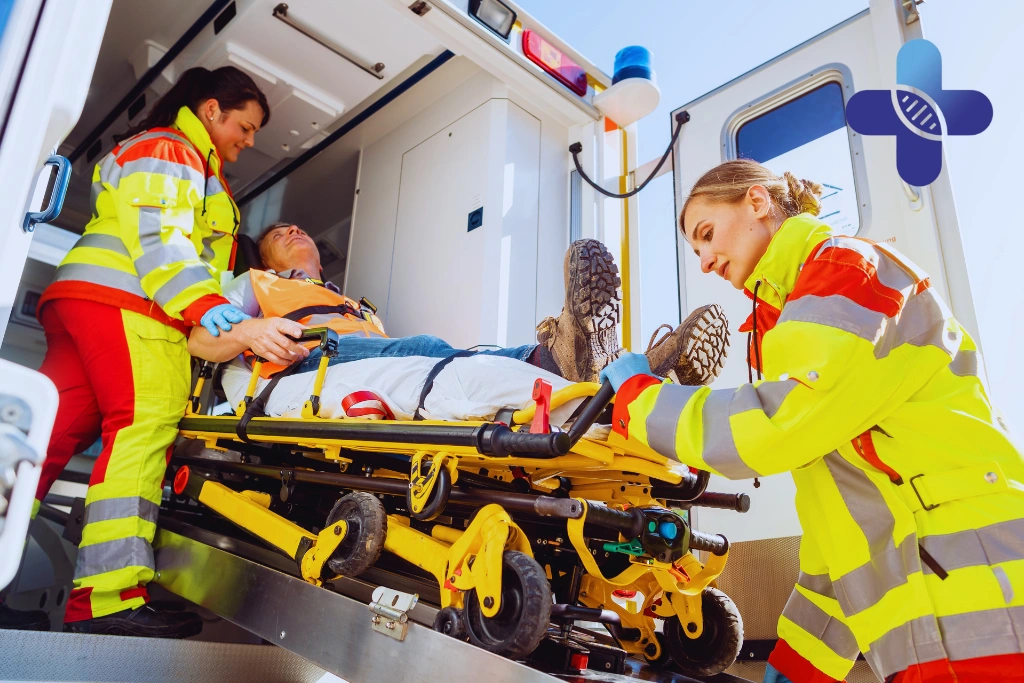
The first few minutes after a scooter accident should stay calm and practical. Avoid crowd pressure and unnecessary movement.
If the injured person is awake, speak calmly and ask simple questions. Notice whether they seem confused, sleepy, dizzy, or unable to remember what happened.
Try to keep the area safe. Ask someone to warn traffic if needed. Ask another person to prepare the location details.
What Information Should You Prepare?
Clear information helps ambulance or medical support understand the situation faster.
Details That Help Coordination
Prepare:
- exact location, map pin, street name, nearby landmark, or business name
- what happened and when the accident occurred
- whether the patient hit their head
- whether the patient lost consciousness or seems confused
- where the pain or injury is located
- whether there is bleeding, swelling, deformity, or severe pain
- whether the patient can sit, stand, walk, or move safely
- known medical conditions, medications, allergies, or pregnancy status if relevant
- passport and travel insurance details if available
- contact person who can stay with the patient
Do not delay urgent help just to find insurance documents.
Scooter Accidents in Tourist Areas
Scooter accidents can happen in many Bali travel settings, including Canggu, Uluwatu, Ubud, Seminyak, Kuta, Sanur, Jimbaran, Nusa Dua, and Denpasar.
Canggu cases may involve busy roads, villa lanes, cafés, or surf areas. Uluwatu cases may involve hills, surf routes, cliff access, or roads toward Jimbaran. Ubud cases may involve day trips, narrow roads, cycling routes, or villa access.
Sanur and Jimbaran are clinic access areas for Life Everyouth Bali. For other areas, ambulance-related coordination depends on patient condition, exact location, route, destination, road access, and availability.
For Uluwatu-related injury and access planning, readers may continue with ambulance in Uluwatu.
Public Emergency Access and Private Ambulance Support
Indonesia has public emergency access through PSC 119. Kemenkes describes PSC 119 as a quick-response emergency health service for critical situations, including situations beyond traffic accidents.
Travelers may also use private ambulance support, clinic coordination, hotel or villa assistance, hospital referral, or insurance support depending on the situation.
The safest option depends on injury severity, patient stability, location, access, destination, and availability.
Need Ambulance Support After a Scooter Accident in Bali?
If someone is injured, confused, bleeding, in severe pain, unable to walk, short of breath, or unsafe to move after a scooter accident, medical transport guidance can help determine whether ambulance support, clinic care, hospital referral, or patient transfer is more appropriate.
Life Everyouth Bali provides Ambulance Service in Bali, with clinic access in Sanur and Jimbaran and coordination depending on patient condition, location, destination, and availability. For ambulance support, contact +6285887888911.
Conclusion: Scooter Accident in Bali Ambulance Guide

A Scooter Accident in Bali should be assessed carefully, even when the injured person can still talk or stand.
Ambulance support may be needed if there is head impact, confusion, severe pain, suspected fracture, bleeding, breathing difficulty, neck pain, back pain, or unsafe movement.
Mild injuries may be suitable for clinic care or ordinary transport if the person is stable. But when symptoms are serious or unclear, it is safer to seek medical guidance before moving the patient.
Frequently Asked Questions (FAQs): Scooter Accident in Bali Ambulance Guide
Should I call an ambulance after a scooter accident in Bali?
Consider ambulance support if there is head impact, confusion, loss of consciousness, severe pain, suspected fracture, heavy bleeding, breathing difficulty, or unsafe movement.
What if the injured person can still stand?
Standing does not always mean the injury is minor. Head injury, internal injury, fracture, or worsening symptoms may still be possible after a crash.
Can I take the injured person by taxi?
A taxi may be reasonable for minor and stable injuries. It may be unsafe if the person is confused, bleeding, in severe pain, unable to sit safely, or may have head, neck, or back injury.
What should I do first after a scooter accident?
Check whether the area is safe, avoid unnecessary movement, keep the patient calm, prepare location details, and seek medical guidance if symptoms are serious or unclear.
What symptoms after head impact are concerning?
Repeated vomiting, worsening headache, confusion, unusual behavior, seizure, loss of consciousness, extreme drowsiness, weakness, or poor coordination should be assessed urgently.
Can Life Everyouth Bali help after a scooter accident?
Life Everyouth Bali may help travelers understand whether ambulance support, clinic care, hospital referral, or patient transfer is more appropriate. For ambulance support, contact +6285887888911.
Does Life Everyouth Bali have clinic access in Canggu or Uluwatu?
Life Everyouth Bali has clinic access in Sanur and Jimbaran. For Canggu, Uluwatu, Ubud, and other areas, coordination depends on patient condition, route, destination, and availability.
What information should I prepare before requesting help?
Prepare the exact location, map pin, what happened, injury details, consciousness status, breathing status, bleeding, pain level, mobility status, medical history, and a reachable contact number.
Can Bali Medical Clinic or a Medical Clinic in Bali help after a scooter accident?
Bali Medical Clinic or a Medical Clinic in Bali may help with assessment, referral planning, documentation, or follow-up guidance depending on injury severity and urgency.
Should I contact insurance before ambulance support?
Insurance may help with documentation or payment guidance, but urgent medical help should not be delayed when symptoms are serious, worsening, or movement is unsafe.
