
Many travelers in Sanur notice that certain smells—food aromas, incense, humidity, AC odors, or street scents—suddenly feel stronger than usual. This heightened sensitivity can be confusing and uncomfortable, especially for visitors adjusting to Bali’s tropical conditions. These sensations are often linked to environmental exposure, sinus changes, allergies, or early Bali flu sensory symptoms, which are part of broader patterns seen in flu in Bali cases, all of which Life Everyouth Bali commonly evaluates in newly arrived travelers.
If you haven’t read our previous guide on elevated heart rate Bali, make sure to explore it—many visitors experience multiple climate-related symptoms at the same time.
Sensitive to Smells in Bali: Why It Happens and What It Means
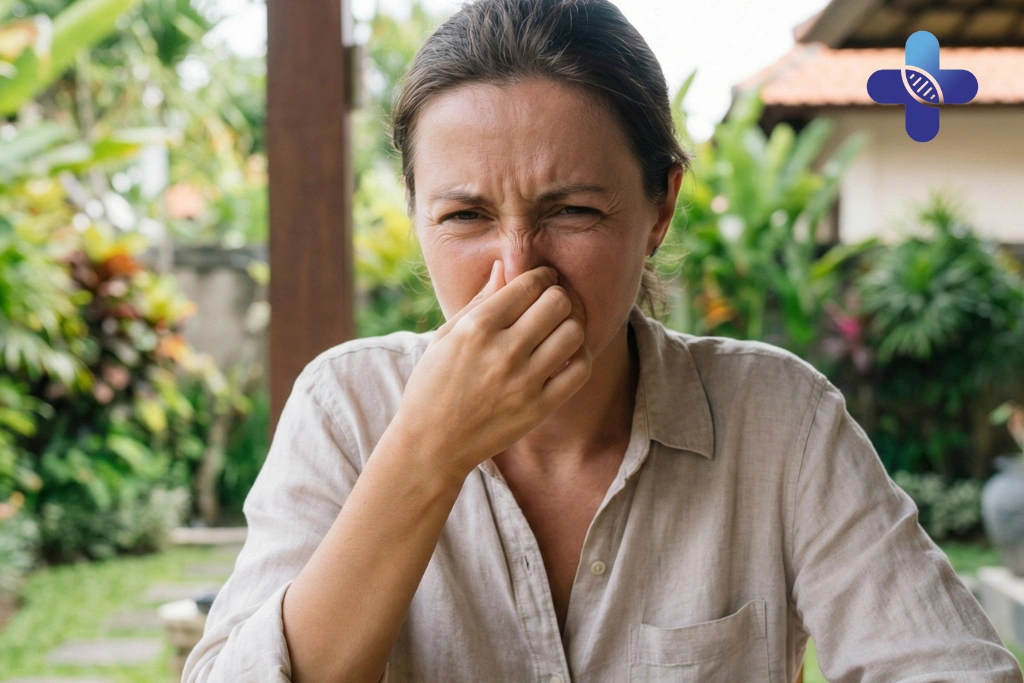
Smell sensitivity is a surprisingly common complaint among visitors staying in Sanur. Strong humidity, natural scents, market aromas, incense, and hotel fragrances can all feel more intense than they do in cooler, drier climates. While often harmless, this condition can also relate to allergies, sinus inflammation, or early signs of flu-like conditions. As a trusted Medical Clinic Bali, Life Everyouth Bali helps travelers understand when smell sensitivity is normal—and when it needs attention.
Why Your Sense of Smell Becomes More Sensitive in Bali
Humidity Enhancing Smell Molecule Density in the Air
Bali’s tropical humidity increases the concentration of scent molecules, making odors feel richer and more noticeable. Life Everyouth Bali often sees visitors report stronger reactions during their first days in Sanur.
AC-Induced Nasal Dryness Increasing Scent Perception
Cold hotel AC can dry the nasal lining and make the nose more reactive, intensifying sensitive to smells Bali episodes during indoor–outdoor transitions.
Strong Natural & Environmental Odors Around Sanur
Sanur’s environment amplifies scent exposure through:
- Sea breeze carrying organic smells
- Market food aromas
- Incense used daily in local offerings
When Smell Sensitivity Is More Than Just Environmental Change
Early Bali Flu Signs That Include Heightened Smell Awareness
Some travelers experience stronger scent perception during the early stages of flu-like conditions. A Bali Medical Clinic like Life Everyouth Bali often evaluates smell-related symptoms among new arrivals.
Sinus Inflammation Making the Nose React More to Irritants
When sinus tissues swell, the nose becomes more reactive to triggers, intensifying sensitive to smells Bali episodes.
Allergic Response Triggered by Bali’s Flora, Dust, or Incense
Sanur’s coastal vegetation, incense use, and market environments can trigger allergies, especially in visitors not accustomed to tropical pollen.
Sensory Overload After Long Flights and Climate Transition
Travel fatigue and sudden exposure to humidity may cause heightened sensory perception. Life Everyouth Bali frequently sees this during the adaptation period.
Common Triggers That Make Travelers More Sensitive to Smells

Street Food Aromas, Incense, and Market Scents in Sanur
Powerful aromas from Sanur’s food stalls, markets, and daily incense offerings can overwhelm travelers not used to such intensity. Life Everyouth Bali often identifies these as common triggers.
Perfume, Cleaning Products, and AC Mold Exposure
Artificial scents, hotel cleaning chemicals, and mild AC mold can amplify sensitive to smells Bali episodes, especially for travelers with sinus sensitivity.
How to Reduce Discomfort When Smells Feel Overwhelming
Simple Breathing, Hydration, and Room Airflow Tips from Life Everyouth Bali
To reduce sensitivity linked to sensitive to smells Bali, Life Everyouth Bali recommends:
- Maintaining hydration to support sinus moisture
- Improving room airflow by adjusting AC and opening windows briefly
- Using slow, deep breathing techniques during strong-smell exposure
When Smell Sensitivity Means You Should See a Doctor in Bali
Warning Signs Linking Smell Sensitivity to Infection or Sinus Issues
Seek help from a Medical Clinic in Bali if sensitivity is accompanied by:
- Persistent congestion
- Facial pressure
- Fever
- Difficulty breathing
- Severe headache
Why Sensory Symptoms Can Escalate Faster in Bali’s Humid Climate
Humidity can intensify inflammation, worsen allergies, and heighten sensory perception, making symptoms escalate more quickly in Sanur.
How Doctor on Call Sanur Bali Helps Assess Symptoms Quickly
Doctor on Call Sanur Bali provides on-location evaluation for visitors who experience discomfort and need fast reassurance without leaving their accommodation.
If you’re feeling unusually sensitive to smells in Bali, contact Doctor on Call Sanur Bali for fast, supportive medical evaluation wherever you’re staying.
Conclusion Sensitive to Smells Bali: Why It Happens

Becoming sensitive to smells in Bali is common, especially for travelers adjusting to humidity, pollen, incense, and environmental changes in Sanur. While often harmless, sensitivity accompanied by other symptoms may signal allergies, sinus inflammation, or early Bali flu signs. Quick evaluation from Life Everyouth Bali helps ensure safe and comfortable travel.For direct medical support, contact Doctor on Call Sanur Bali for the fastest assistance wherever you stay.
For your next read, explore our guide on heavy muscles Bali to understand why some travelers experience unusual muscle heaviness while adapting to the tropical climate.
Frequently Asked Question (FAQ) Sensitive to Smells Bali: Why It Happens
Why am I suddenly sensitive to smells in Bali?
Many travelers become sensitive to smells Bali due to humidity, AC dryness, and stronger natural odors. Life Everyouth Bali frequently evaluates visitors experiencing this adaptation response.
Can Bali flu cause heightened smell sensitivity?
Yes, early Bali flu may involve sensory changes, including smell sensitivity. Life Everyouth Bali, as a trusted Medical Clinic Bali, helps identify whether symptoms are flu-related.
Does Sanur humidity make smells stronger?
Absolutely—humidity increases scent molecule density. This is why smells feel amplified in Sanur’s beachfront environment.
How do I know if smell sensitivity is from allergies or infection?
Allergies usually cause itching or sneezing, while infections may cause congestion, fatigue, or fever. Life Everyouth Bali can help distinguish both conditions.
Are expats more prone to sensitive to smells Bali due to climate change?
Yes, long-term climate exposure can heighten reactions. Many expats report stronger smell sensitivity during seasonal shifts.
When should I visit a Medical Clinic in Bali for smell sensitivity?
If sensitivity lasts more than several days or is accompanied by pressure, fever, or breathing discomfort, a Medical Clinic in Bali should evaluate you.
Does AC exposure increase smell irritation?
Yes, AC dryness can heighten scent perception, making sensitive to smells Bali symptoms more noticeable.
Can digital nomads develop sensitivity due to indoor air quality?
Yes, long hours in AC rooms may cause dryness and sensitivity. Life Everyouth Bali often sees this among nomads.
How long should this sensitivity last before I get checked?
Mild cases resolve within a few days. Persistent or worsening symptoms should be checked by a medical professional.
Can Doctor on Call Sanur Bali evaluate smell-related symptoms remotely?
Yes, remote triage is available, and a doctor can visit your accommodation in Sanur for a more thorough assessment.
