
Many travelers staying in Sanur often notice that their discomfort becomes more pronounced after sunset, even if their daytime symptoms felt mild or manageable. Bali’s night humidity, temperature drops, and circadian rhythm changes all play a role in amplifying flu-like sensations. These patterns align closely with what’s known as Bali flu night symptoms and broader reactions associated with flu in Bali, which Life Everyouth Bali frequently evaluates in tourists and long-stay visitors.
If you haven’t read our previous guide on Bali flu headache symptoms, make sure to explore it to understand how daytime pressure and climate interactions set the stage for stronger nighttime symptoms.
Why Some Tourists Feel Worse at Night: Early Signs of “Bali Flu”
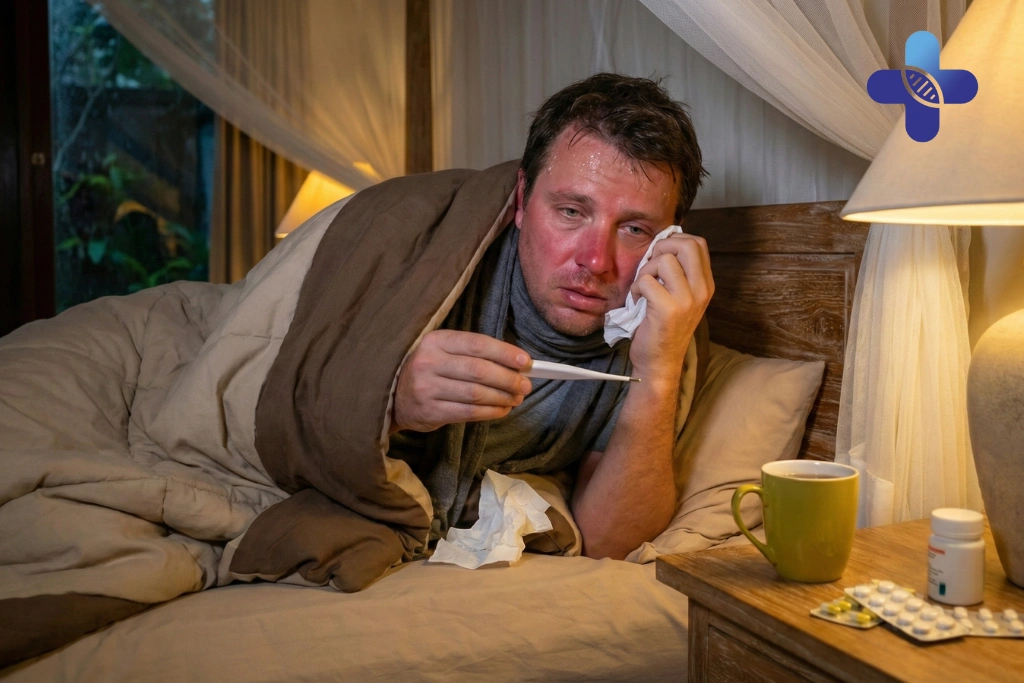
Nighttime often intensifies the body’s perception of discomfort, especially in humid regions like Sanur. Many travelers mistake this for simple post-activity exhaustion, but in many cases, these changes reflect early Bali flu night symptoms. Life Everyouth Bali, as a trusted Bali Medical Clinic, helps visitors differentiate between normal end-of-day tiredness and symptoms that may require closer observation.
Why Bali Flu Symptoms Intensify at Night
Circadian Rhythm Changes That Make Symptoms More Noticeable
The body’s natural nighttime rhythm lowers cortisol levels, making inflammation and discomfort more pronounced. Life Everyouth Bali notes that travelers often feel:
- Increased head pressure
- Heightened body aches
- Worsening congestion during evening hours
Nighttime Humidity in Sanur Making Airways More Sensitive
High evening humidity thickens the air and increases airway sensitivity. This often magnifies Bali flu night symptoms like sinus pressure, irritation, and mild coughing.
Increased Fatigue After a Full Day of Activities
Sightseeing, sun exposure, and dehydration compound the body’s stress. By night, travelers are more vulnerable to symptoms that were “silent” earlier in the day.
Common Nighttime Symptoms Visitors Mistake for Simple Tiredness
Head Pressure That Feels Heavier After Sunset
At night, blood vessels dilate and sinus passages swell, making head pressure more intense. A Bali Medical Clinic like Life Everyouth Bali frequently sees this pattern in new arrivals.
Runny Nose and Sneezing Triggered by Night Air or AC
Sanur’s cooler night breeze and hotel AC can irritate nasal passages, causing mild flu-like symptoms that often go unnoticed during the day.
Sudden Chills Often Misread as Cold Weather Response
Sudden chills are one of the early Bali flu night symptoms, especially when combined with fatigue or sinus irritation.
Light Fever That Appears Only at Night
A mild fever that comes and goes at night often indicates the immune system is reacting—not merely responding to tiredness or temperature changes.
Environmental & Behavioral Factors That Worsen Night Symptoms
Cold AC, Outdoor Dining, and Night Breeze Exposure in Sanur
Sanur’s beachfront environment and nighttime conditions may worsen symptoms due to:
- Overuse of cold AC
- Outdoor dining near windy beachfront areas
- Sudden transitions from warm to cold environments
Life Everyouth Bali sees these triggers frequently in night-onset cases.
Late-Night Hydration Gaps That Lower Immunity
Not drinking enough water in the evening increases vulnerability to Bali flu night symptoms, especially when combined with humidity or AC dryness.
How to Reduce Bali Flu Symptoms Before Bed
Pre-Sleep Routine Recommended by Life Everyouth Bali
To reduce Bali flu night symptoms, Life Everyouth Bali recommends:
- Drinking warm fluids or electrolytes before bed
- Keeping AC at a moderate temperature
- Taking a warm shower to open sinuses
- Avoiding heavy meals late at night
When Night Symptoms Need a Doctor’s Evaluation
Warning Signs That Suggest Early-Stage Infection
Seek care at a Medical Clinic in Bali if you experience:
- Persistent fever
- Escalating chills
- Sharp sinus pain
- Breathing discomfort
- Symptoms worsening nightly over 2–3 days
Why Some Tourists Decline More Rapidly Overnight
Nighttime dampness, immune fatigue, and travel-related stress create conditions where early flu symptoms intensify faster. This is especially common in Sanur’s humid evenings.
How Doctor on Call Life Everyouth Bali Supports Travelers at Night
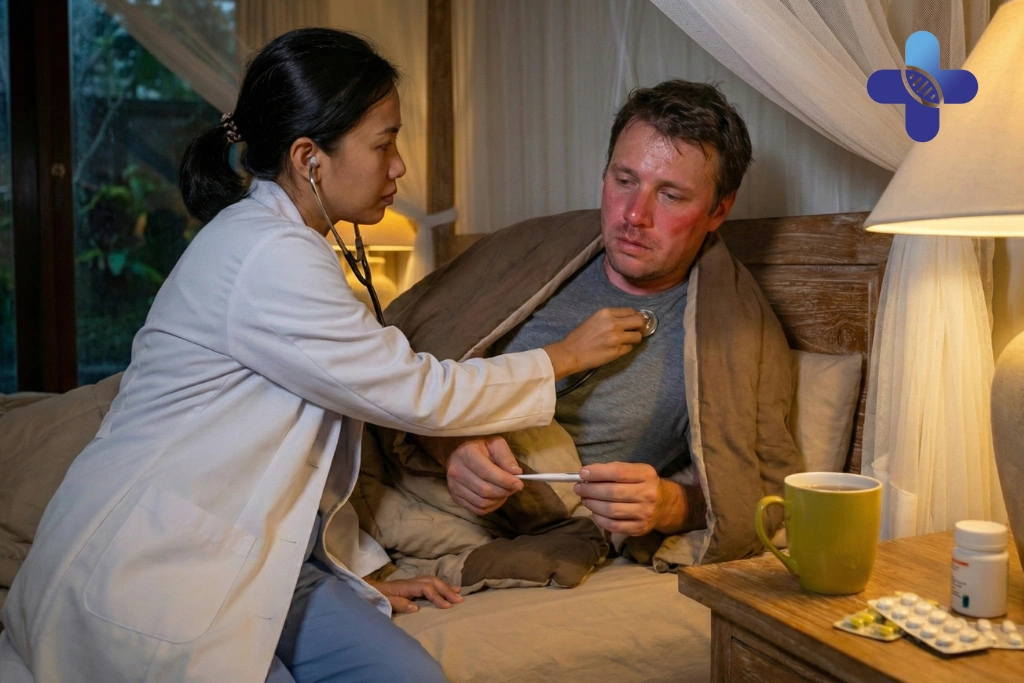
Doctor on Call Life Everyouth Bali provides nighttime evaluations directly in your hotel, helping travelers receive fast, comfortable care without needing to leave their accommodation.
For fast, comfortable medical care in Sanur, contact Doctor on Call Life Everyouth Bali for immediate support right at your hotel.
Conclusion Bali Flu Night Symptoms: Why You Feel Worse at Night

Bali’s nighttime environment—humid air, cooler breezes, and end-of-day bodily fatigue—makes flu-like symptoms more noticeable for many travelers staying in Sanur. Recognizing early Bali flu night symptoms ensures timely care and prevents discomfort from escalating unnecessarily. For immediate assistance, contact Doctor on Call Life Everyouth Bali for dependable nighttime medical support.
Ready for the next insight? Explore our upcoming guide on Bali flu in digital nomads to understand why remote workers often experience sudden fatigue, headaches, or low immunity after settling in Bali.
Frequently Asked Question (FAQ) Bali Flu Night Symptoms: Why You Feel Worse at Night
Why do Bali flu night symptoms feel stronger after sunset?
Lower nighttime cortisol and increased humidity make symptoms more noticeable. Life Everyouth Bali often sees travelers experiencing stronger discomfort at night.
Are nighttime chills a sign of early Bali flu?
Yes, chills that appear at night—especially with fatigue—may indicate early Bali flu night symptoms. Monitoring progression is important.
Does Sanur humidity worsen flu symptoms at night?
Absolutely. Sanur’s humid nights thicken the air and increase airway sensitivity. As a trusted Bali Medical Clinic, Life Everyouth Bali treats many humidity-driven cases.
How do I differentiate tiredness from Bali flu?
Simple fatigue improves with rest, while Bali flu night symptoms escalate or present additional signs like congestion or chills.
Are digital nomads more prone to nighttime symptoms?
Yes, long screen time and inconsistent hydration increase vulnerability. Life Everyouth Bali sees this pattern often among nomads in Sanur.
When should I visit a Medical Clinic in Bali for night symptoms?
If symptoms worsen nightly or include fever, breathing issues, or sinus pain, visiting a Medical Clinic in Bali is recommended.
Why do symptoms worsen in AC environments?
Cold AC dries out nasal passages, increasing irritation and worsening Bali flu night symptoms. Moderate settings help reduce discomfort.
Can dehydration contribute to Bali flu night symptoms?
Yes, dehydration decreases immune performance. Evening hydration is essential to prevent worsening nighttime symptoms.
How long should symptoms last before I worry?
Most mild symptoms resolve within 48 hours. Persistent or escalating Bali flu night symptoms should be evaluated medically.
Can Doctor on Call Life Everyouth Bali assess symptoms at night?
Yes, nighttime assessments are available to help travelers receive safe, immediate support without leaving their hotel in Sanur.
