
When someone is seriously ill, injured, weak, or unable to move safely, Ambulance Response Time in Bali becomes one of the first questions travelers ask. For broader medical transport guidance, Ambulance in Bali explains when emergency ambulance, patient transfer, or supported movement may be needed.
Ambulance Response Time in Bali: What Travelers Should Understand Before Requesting Emergency Medical Transport
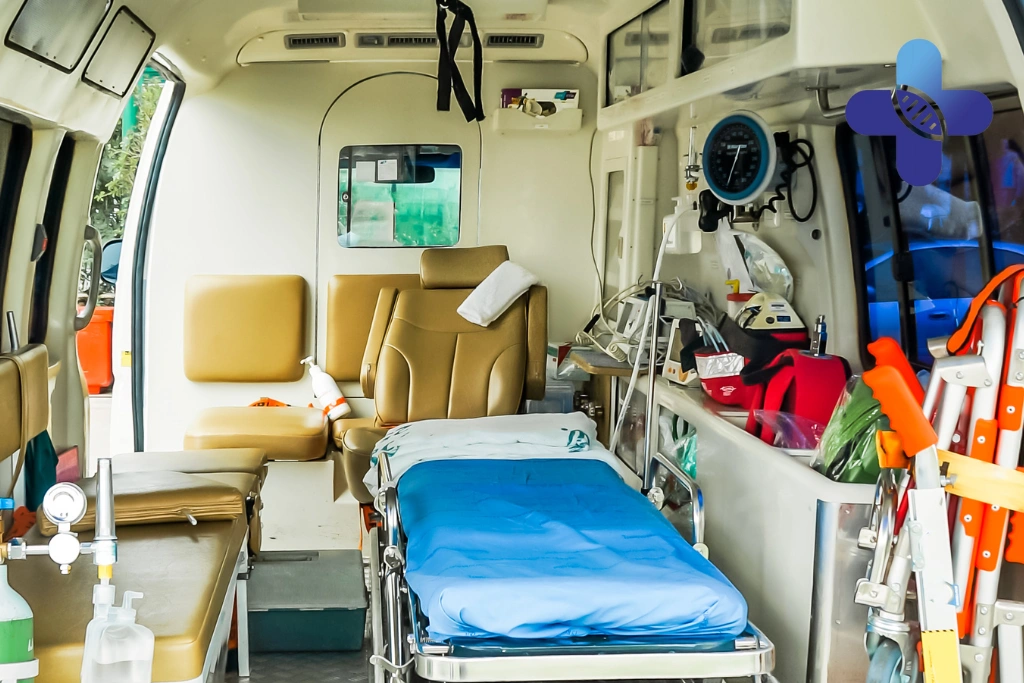
When a medical situation happens, it is natural to ask, “How fast can an ambulance arrive?”
The honest answer is that ambulance arrival time in Bali can vary. It depends on the patient’s condition, exact location, traffic, road access, weather, service availability, destination, and how clearly the pickup point is shared.
Ambulance Response Time in Bali should not be treated as a fixed promise. It is better understood as part of emergency coordination, where accurate information can help reduce avoidable delays.
Life Everyouth Bali supports travelers through clinic access in Sanur and Jimbaran, with ambulance-related coordination depending on urgency, location, access route, destination, patient condition, and availability.
Why Ambulance Response Time Can Vary
Bali has many different travel environments. A medical request may come from a hotel in Sanur, a villa in Jimbaran, a retreat in Ubud, a café in Canggu, a surf area in Uluwatu, or a beach access point with limited vehicle entry.
Even in the same area, response time may differ depending on the exact location.
A hotel lobby is usually easier to reach than a private villa with a hidden gate. A main road is usually easier than a narrow lane, hillside property, beach staircase, or busy event venue.
WHO describes emergency care systems as including care at the scene of illness or injury, during transport, and through emergency unit and early inpatient care. This means ambulance coordination is part of a wider care pathway, not only a matter of vehicle arrival.
Main Factors That Affect Arrival
Some delays are avoidable. Others depend on traffic, route, access, weather, and real-time availability.
Details That Can Change Response Time
Ambulance arrival may be affected by:
- exact pickup location and map pin accuracy
- hotel, villa, room number, gate, or entrance access
- traffic conditions and road closures
- narrow roads, stairs, hills, beach paths, or limited parking
- patient condition and urgency
- ambulance availability at the time of request
- destination clinic or hospital
- weather, event crowds, or local access restrictions
Because these factors can change quickly, it is safer not to rely on a fixed response-time estimate.
What Travelers Can Do to Reduce Avoidable Delays
The fastest way to help coordination is to give clear, practical details.
A vague location such as “near the beach” or “at our villa in Canggu” may not be enough. A map pin, property name, room number, gate detail, and local landmark can help the team understand where to go.
If the patient is in a hotel or villa, ask staff or the host to help guide the ambulance team from the entrance. For accommodation-specific pickup planning, readers may review an ambulance from a hotel or villa in Bali.
Should You Wait or Use a Taxi?
A taxi or private car may be reasonable when the patient is stable, alert, able to sit safely, and not worsening.
But if the patient is confused, fainting, short of breath, bleeding, seriously injured, in severe pain, or unable to move safely, ordinary transport may not be appropriate.
The question is not only which option is faster. It is whether the patient can safely tolerate the journey.
If the situation is unclear, seek medical guidance before moving the patient.
What to Prepare When Asking About Arrival Time
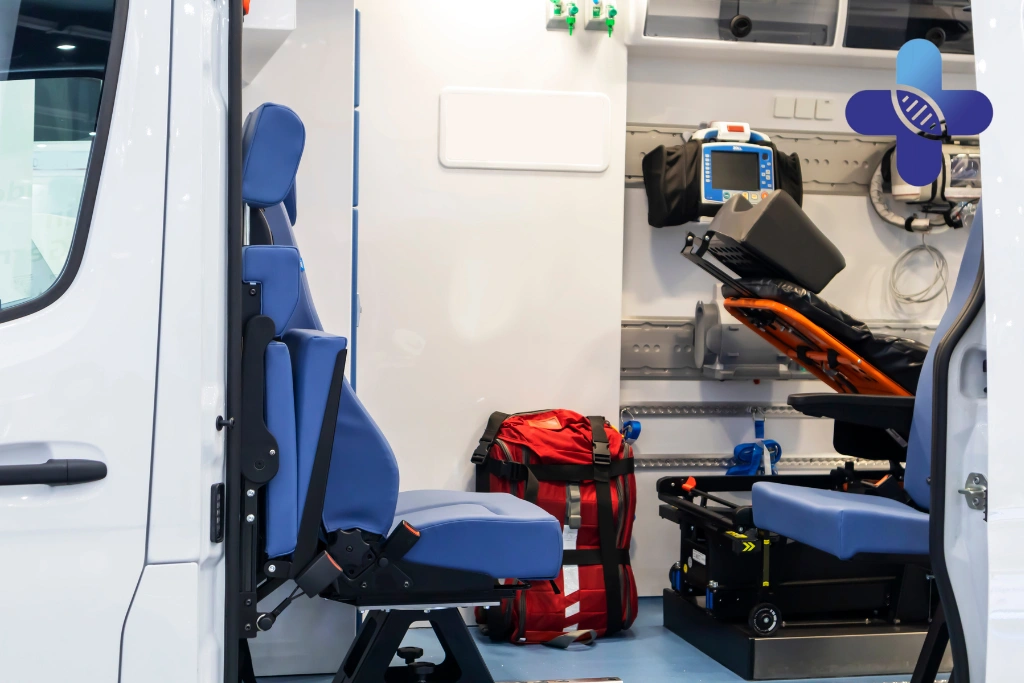
When requesting ambulance support, prepare the information that helps the team estimate access and urgency.
Information That Helps Coordination
Prepare:
- exact location and map pin
- hotel, villa, venue, or landmark name
- room number, gate, floor, entrance, or security post
- patient’s age and main symptoms or injury
- whether the patient is conscious and breathing normally
- whether the patient can sit, stand, walk, or move safely
- what happened and when symptoms started
- destination clinic, hospital, hotel, villa, or airport if known
- reachable contact person at the location
Do not delay urgent help while searching for documents. If a passport, insurance, medication list, or medical history is available, keep it nearby.
For practical preparation while help is being arranged, readers can continue with what to do while waiting for an ambulance in Bali.
Public Emergency Access and Private Ambulance Support
Indonesia has public emergency access through PSC 119. Kemenkes describes PSC 119 as a quick-response emergency health service for critical situations, including situations beyond traffic accidents.
Kemenkes also explains that 119 emergency medical access can provide initial emergency guidance, send medical help and ambulances, and help refer patients to nearby health facilities.
Travelers may also use private ambulance support, clinic coordination, hotel or villa assistance, hospital referral, and insurance support depending on patient condition and location.
Travel insurance can help with documentation or reimbursement, but coverage varies. CDC explains that travel health insurance, travel disruption insurance, and medical evacuation insurance provide different types of coverage for illness or injury abroad.
Need Ambulance Support in Bali?
If someone is seriously ill, injured, unstable, confused, dehydrated, in severe pain, struggling to breathe, or unable to move safely, medical transport guidance can help determine whether ambulance support, clinic care, hospital referral, or patient transfer is more appropriate.
Life Everyouth Bali provides Ambulance Service in Bali, with clinic access in Sanur and Jimbaran and coordination depending on patient condition, location, destination, and availability. For ambulance support, contact +6285887888911.
Conclusion: Ambulance Response Time in Bali: Traveler Guide

Ambulance Response Time in Bali can vary because emergency coordination depends on patient urgency, exact location, access route, traffic, weather, destination, and availability.
Travelers can help reduce avoidable delays by sharing a clear map pin, room or villa details, entrance access, patient condition, mobility status, and a reachable contact person.
Life Everyouth Bali, Bali Medical Clinic, and a Medical Clinic in Bali may help guide the next step depending on symptoms, urgency, location, and patient stability.
Frequently Asked Questions (FAQs): Ambulance Response Time in Bali: Traveler Guide
How fast can an ambulance arrive in Bali?
Ambulance arrival time can vary depending on patient condition, exact location, road access, traffic, weather, destination, and availability.
Can ambulance response time be guaranteed?
No. Response time should not be treated as a fixed guarantee because route, access, traffic, and availability can change quickly.
What affects ambulance arrival in Bali?
Exact location, map pin accuracy, hotel or villa access, traffic, narrow roads, parking, stairs, patient urgency, destination, and availability can all affect arrival.
How can I help the ambulance arrive more easily?
Share the exact map pin, room number, villa gate, entrance point, landmark, patient symptoms, and a contact person who can guide the team.
Should I take a taxi if the ambulance may take time?
A taxi may be reasonable only if the patient is stable, alert, able to sit safely, and not worsening. If movement is unsafe, seek medical guidance first.
Can Life Everyouth Bali help with ambulance coordination?
Life Everyouth Bali may help travelers understand whether ambulance support, clinic care, hospital referral, or patient transfer is more appropriate. For ambulance support, contact +6285887888911.
Does location affect ambulance response time?
Yes. A hotel lobby, private villa, beach access point, hillside venue, narrow lane, or event location can each affect access and coordination.
What should I prepare before asking about arrival time?
Prepare the exact location, map pin, patient symptoms, consciousness and breathing status, mobility status, access details, destination if known, and a reachable phone number.
Can Bali Medical Clinic or a Medical Clinic in Bali help after ambulance arrival?
Bali Medical Clinic or a Medical Clinic in Bali may help with assessment, referral planning, documentation, or follow-up guidance depending on patient condition.
Should I contact insurance while waiting?
Insurance may help with documentation or payment guidance, but urgent medical help should not be delayed when symptoms are serious, worsening, or movement is unsafe.
