
Many travelers staying in Sanur quickly notice watery eyes in Bali, especially during their first few days on the island. The rapid contrast between cool indoor AC and Bali’s warm, humid outdoor air can irritate the eye surface and increase sensitivity to wind, scents, and particles carried through the tropical environment. Because these reactions can resemble early immune responses associated with flu in Bali, visitors often find it difficult to tell whether their symptoms are harmless or concerning. Life Everyouth Bali frequently supports travelers experiencing these eye-related issues as part of their natural climate adjustment.
Before reading further, you may want to check our previous guide on poor sleep in Bali to understand how environmental changes affect overall comfort and adaptation.
Watery Eyes in Bali: Why It Happens and When You Should Be Concerned
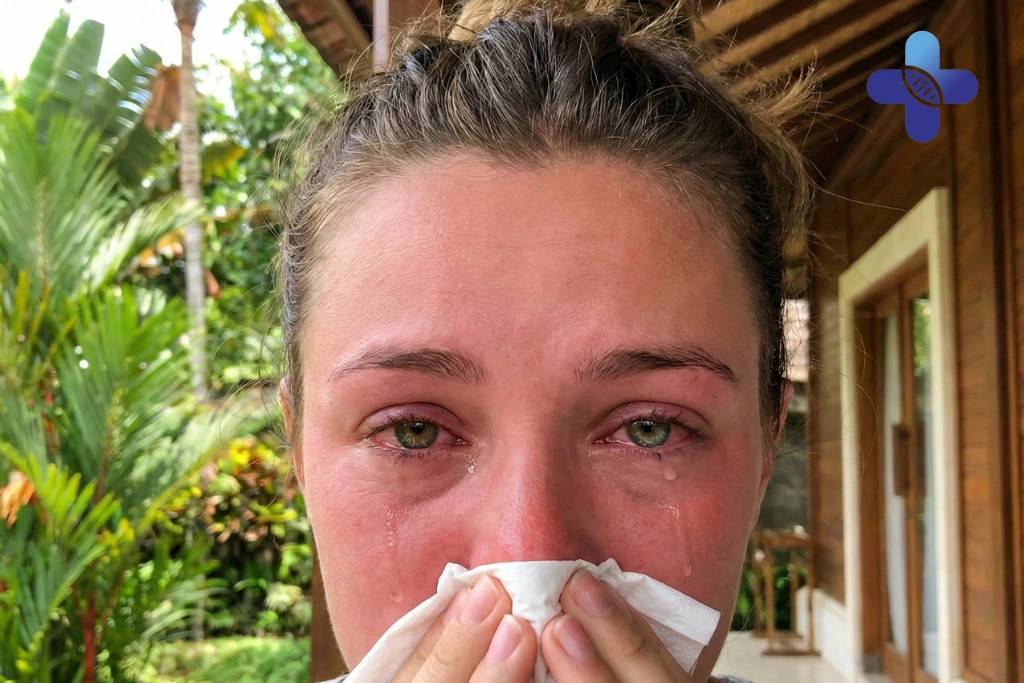
Many visitors in Sanur report sudden tearing, stinging, or eye sensitivity during their Bali stay. These symptoms can appear at the beach, in air-conditioned rooms, or in areas exposed to incense, cooking smoke, or windy conditions. Triggers range from humidity and allergens to AC dryness or even early stages of Bali flu. Life Everyouth Bali, a trusted Bali Medical Clinic, routinely evaluates travelers experiencing these concerns.
Why Your Eyes Become Watery More Easily in Bali’s Climate
High Humidity Making Eyes More Sensitive and Reactive
Sanur’s naturally humid climate keeps the eye surface more exposed to environmental particles. Reflex tearing is a normal protective response when the air is moist and warm. Life Everyouth Bali frequently sees this in travelers adjusting to tropical humidity.
AC-Induced Dryness Triggering Reflex Tear Production
Cold AC dries out the tear film, causing the eyes to overproduce tears once you wake or step outside. This is a leading cause of watery eyes in Bali, especially among visitors who also wake with Morning Congestion Bali due to sleeping in cold, dry air.
Common reactions include:
- Stinging or burning upon waking
- Sudden tearing outdoors
- Eyes feeling dry yet watery at the same time
Understanding this AC-related pattern helps differentiate simple dryness from infection or early irritation.
Coastal Breeze in Sanur Carrying Sand, Salt, and Allergens
Sanur’s beachfront breeze carries micro-particles—sand, salt residue, and local plant allergens—that easily irritate the eye surface, especially during afternoon winds.
Medical Causes Behind Watery Eyes That Travelers Often Overlook
Early Bali Flu Symptoms That Sometimes Include Watery Eyes
Early stages of flu in Bali can involve tearing, sinus irritation, mild fatigue, or temperature sensitivity. As a leading Bali Medical Clinic, Life Everyouth Bali helps travelers determine whether these symptoms are simply irritation from the environment or signs of a developing flu. The clinic frequently assesses visitors who experience this overlap, ensuring they receive appropriate guidance and early care when needed.
Allergic Reactions to Bali’s Pollen, Incense, or Dust
Local airborne triggers—including temple incense, tropical pollen, dust, mosquito coils, and scented oils—can cause strong eye reactions.
Common signs include:
- Itchy eyelids
- Repetitive sneezing
- A heavy feeling around the eyes
Identifying these triggers helps prevent recurring irritation throughout your stay.
Mild Conjunctivitis from Humidity or Outdoor Exposure
Warm, humid conditions make irritants stick to the eye surface more easily, increasing the risk of mild conjunctivitis. Symptoms include redness, tearing, and gritty sensations.
Sinus Irritation Leading to Reflex Eye Watering
Sinus inflammation from AC, dust, or temperature shifts often triggers reflex tearing because the sinuses and tear ducts share drainage pathways.
Lifestyle Triggers That Make Watery Eyes Worse in Sanur

Exposure to Perfumes, Mosquito Coils, and Cooking Smells
Strong scents are common across Bali—from temple incense to mosquito coils and beachfront food stalls. Travelers sensitive to odors often react quickly, similar to patterns discussed in Sensitive to Smells Bali.
Typical triggers include:
- Incense smoke
- Air fresheners
- Cooking fumes
Avoiding intense scents can significantly reduce eye irritation.
Long Hours Indoors with Low AC Humidity
Extended coworking or indoor stay in low-humidity AC settings can dry the eyes, increasing the likelihood of watery eyes in Bali when stepping outdoors into humid air.
How to Manage Watery Eyes While Staying in Bali
Hydration, Eye Protection, and Cooling Tips from Life Everyouth Bali
Managing symptoms effectively involves protecting your eyes and maintaining moisture balance. Strategies include:
- Wearing protective eyewear outdoors
- Staying hydrated throughout the day
- Moderating AC usage
- Using cool compresses when irritation appears
These habits support smoother eye adaptation in Bali’s tropical climate.
When Watery Eyes Mean You Should See a Doctor in Bali
Warning Signs Indicating Infection or Severe Allergy
Seek evaluation at a Medical Clinic in Bali if you notice:
- Yellow discharge
- Persistent redness
- Pain with blinking
- Symptoms worsening after 24–48 hours
Why Eye Symptoms Can Escalate Faster in Bali’s Humid Climate
Humidity accelerates irritation and bacterial accumulation on the eye surface, especially for travelers who rub their eyes or wear contact lenses.
How Doctor on Call Sanur Bali Helps Diagnose Symptoms Quickly
Doctor on Call Sanur Bali offers fast, hotel-side evaluation for eye discomfort. If symptoms from watery eyes in Bali start to affect your comfort, contact Doctor on Call Sanur Bali for fast, reliable medical support wherever you stay.
Conclusion Watery Eyes in Bali: Causes and What to Know

Watery eyes in Bali are very common due to humidity, allergens, AC dryness, and environmental exposure. While mild cases usually resolve, symptoms that worsen or persist—especially with pain, discharge, or redness—should be checked by a medical professional. Life Everyouth Bali’s Doctor on Call Sanur Bali service ensures accessible, traveler-friendly support.
Next, don’t miss our upcoming guide on skin sensitivity Bali to learn how humidity and sun exposure may affect your skin.
Frequently Asked Question (FAQ) Watery Eyes in Bali: Causes and What to Know
Why do I suddenly experience watery eyes in Bali?
Humidity, dust, and coastal breeze can irritate the eye surface, especially for travelers new to tropical climates. Many visitors react strongly during their first 48 hours in Sanur. Life Everyouth Bali routinely evaluates cases of watery eyes in Bali caused by climate adaptation.
Can Bali flu cause watery eyes as an early symptom?
Yes. Early flu in Bali may include watery eyes, mild sinus irritation, or fatigue before stronger symptoms develop. Life Everyouth Bali helps visitors identify whether tearing is caused by flu, irritation, or allergies.
Does Sanur humidity worsen eye irritation?
Absolutely. Humidity increases sensitivity and makes tiny particles more irritating. Many travelers notice increased tearing on especially humid days. Life Everyouth Bali often assists guests adjusting to Sanur’s coastal microclimate.
How do I know if my watery eyes are from allergies or infection?
Allergies usually cause itching, swelling, and sneezing, while infections cause pain, redness, and yellow discharge. A Medical Clinic Bali such as Life Everyouth Bali can confirm the cause and provide proper treatment.
Are expats more prone to watery eyes in Bali due to climate change?
Yes. Moving from low-humidity regions to Bali’s moist climate often triggers temporary eye sensitivity. Life Everyouth Bali frequently supports expats adapting to Bali’s environmental conditions.
When should I visit a Medical Clinic in Bali for watery eyes?
Seek help if symptoms persist beyond two days, worsen, or include pain or discharge. A Medical Clinic in Bali can evaluate whether the issue is allergic, infectious, or environmental.
Does AC exposure make watery eyes more likely?
Yes. Dry AC air destabilizes natural tear moisture, often leading to reflex tearing. This pattern commonly appears alongside Morning Congestion Bali, which Life Everyouth Bali frequently evaluates.
Can digital nomads get watery eyes from indoor air quality?
Definitely. Many coworking spaces have low humidity, causing dryness and irritation. Digital nomads often report watery eyes in Bali after long hours indoors.
How long should watery eyes last before seeking help?
Mild cases typically improve within 24–48 hours. Persistent or worsening symptoms may indicate infection or severe allergy. Life Everyouth Bali provides fast evaluation to prevent complications.
Can Doctor on Call Sanur Bali diagnose eye irritation remotely?
Yes. Remote triage can determine whether in-person care is needed. Doctor on Call Sanur Bali can also visit your accommodation for a full examination.
