
Understanding Ambulance Services in Bali before a trip can help visitors make calmer decisions if illness, injury, severe weakness, or unsafe movement happens at a hotel, villa, beach area, or tourist route. For broader medical transport guidance, Ambulance in Bali explains when emergency ambulance, patient transfer, or supported transport may be needed.
Ambulance Services in Bali: What Visitors Should Know Before Traveling, Staying, or Exploring the Island

Most visitors do not think about ambulance services before arriving in Bali. They plan hotels, beaches, restaurants, tours, scooters, retreats, and airport transfers.
But when someone becomes seriously ill or injured, transport decisions can become difficult very quickly.
Ambulance Services in Bali may help when a visitor is unstable, seriously injured, severely weak, confused, dehydrated, or unable to move safely by ordinary transport.
Life Everyouth Bali supports travelers through clinic access in Sanur and Jimbaran, with ambulance-related coordination depending on patient condition, urgency, exact location, destination, access route, and availability.
Why Visitors Should Understand Ambulance Services Before They Need Them
A medical situation during travel can feel different from one at home. Visitors may not know which clinic to contact, which hospital is appropriate, how far the location is, or whether a taxi is safe enough.
Ambulance support is not only about transport. WHO describes emergency care systems as including care at the scene of illness or injury, during transport, and through emergency unit and early inpatient care. This helps explain why patient movement can be part of the care pathway, especially when a person is unstable or unsafe to move alone.
Knowing the basics before something happens can help visitors respond more calmly.
What Ambulance Services May Support During Travel
Ambulance-related support can vary depending on the situation. Some cases involve urgent symptoms. Others involve stable patients who still need help moving between care locations.
A visitor may need ambulance support from a hotel, villa, resort, restaurant, roadside location, beach area, event venue, airport route, or clinic.
The goal is to help the patient reach appropriate care more safely when ordinary movement may not be suitable.
For urgent symptoms, Emergency Ambulance Service in Bali may be the more relevant option.
When Visitors May Need Ambulance Support
Some symptoms should be taken seriously, especially when they appear suddenly or make the patient difficult to move.
Warning Signs That May Need Urgent Help
Consider ambulance support if the patient has:
- chest pain, chest pressure, or severe breathing difficulty
- fainting, collapse, confusion, or reduced consciousness
- heavy bleeding, serious injury, or suspected fracture
- head injury, neck pain, back pain, or severe pain after a fall or crash
- severe dehydration, repeated vomiting, or inability to stay alert
- seizure-like activity or sudden weakness
- inability to sit, stand, walk, or move safely
- symptoms that are worsening or difficult to judge
These signs do not confirm a diagnosis. They suggest the patient may need urgent medical assessment and safer transport.
Ambulance, Taxi, Clinic, or Hospital?
A taxi or private car may be reasonable when the patient is stable, alert, able to sit safely, and not worsening.
A clinic may be suitable when symptoms are concerning but the patient can travel safely. A hospital may be needed when symptoms are serious, worsening, or likely to require more advanced assessment.
Ambulance support should be considered when the patient is confused, fainting, short of breath, bleeding, seriously injured, in severe pain, or unable to move safely.
The practical question is simple: can the patient travel safely without medical support?
Emergency Ambulance and Patient Transfer Are Different
Not every ambulance-related service is for a life-threatening emergency.
Emergency ambulance is generally for urgent, unstable, or unsafe situations. Patient transfer is usually for a stable patient who still needs supported movement between a hotel, villa, clinic, hospital, airport, or recovery accommodation.
A visitor recovering after treatment may not need emergency response, but they may still need help moving comfortably and safely.
For stable cases, Non-Emergency Patient Transfer in Bali may be more appropriate than emergency ambulance.
What Visitors Should Prepare Before Requesting Support
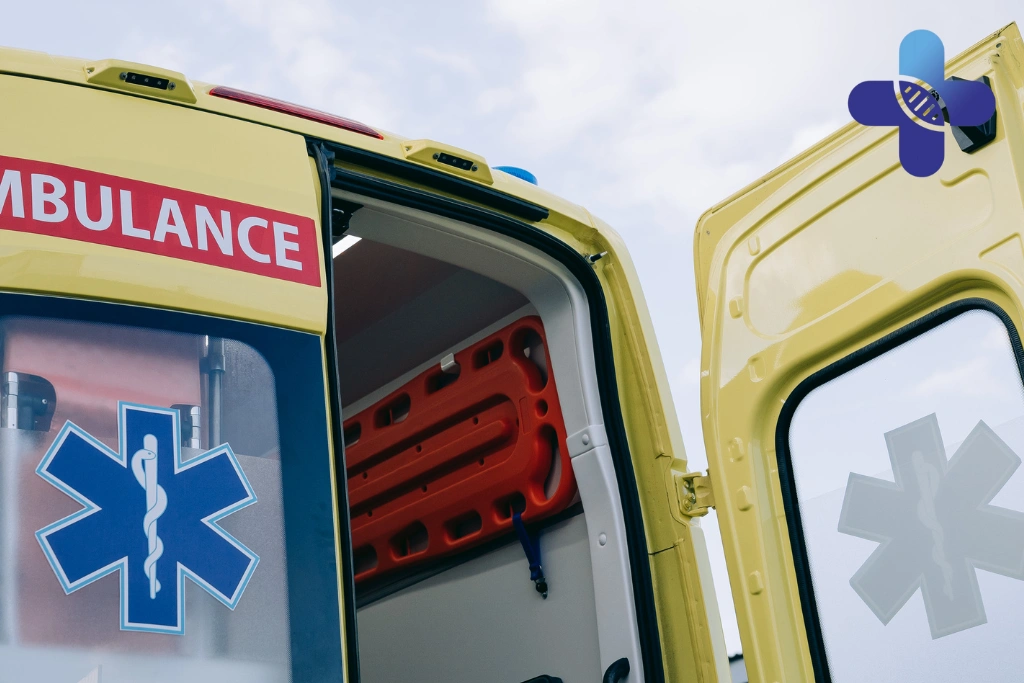
Clear information helps medical support understand the situation faster.
Details That Help Coordination
Prepare:
- exact location, including hotel, villa, room number, gate, landmark, or map pin
- patient’s age and main symptoms or injury
- whether the patient is conscious and breathing normally
- whether the patient can sit, stand, walk, or move safely
- what happened and when symptoms started
- known medical conditions, medications, allergies, or pregnancy status if relevant
- passport and travel insurance details if available
- destination clinic, hospital, hotel, villa, airport, or residence if known
- contact person who can stay with the patient
Do not delay urgent care just to search for documents.
CDC explains that travel disruption insurance, travel health insurance, and medical evacuation insurance can differ by policy, so visitors should understand what their coverage includes before relying on it abroad.
Public Emergency Access and Private Ambulance Support
Indonesia has public emergency access through PSC 119. Kemenkes describes PSC 119 as a quick-response emergency health service for critical situations, including situations beyond traffic accidents.
Visitors may also use private ambulance support, clinic coordination, hotel or villa assistance, hospital referral, and insurance support depending on the patient’s condition.
No single pathway fits every case. The safest decision depends on urgency, symptoms, mobility, location, access, and destination.
Ambulance Services in Sanur, Jimbaran, and Other Bali Areas
Sanur and Jimbaran are clinic access areas for Life Everyouth Bali. Visitors staying in these areas may need support from hotels, villas, resorts, residences, restaurants, or beach areas.
Other visitor areas such as Ubud, Canggu, Uluwatu, Seminyak, Kuta, Nusa Dua, and Denpasar may also involve ambulance-related coordination. Life Everyouth Bali should not be described as having clinic locations outside Sanur and Jimbaran.
For clinic access locations, readers can review ambulance in Sanur and ambulance in Jimbaran.
Need Ambulance Services in Bali?
If someone is seriously ill, injured, unstable, confused, dehydrated, in severe pain, struggling to breathe, or unable to move safely, medical guidance can help determine whether ambulance support, clinic care, hospital referral, or patient transfer is more appropriate.
Life Everyouth Bali provides Ambulance Service in Bali, with clinic access in Sanur and Jimbaran and coordination depending on patient condition, location, destination, and availability. For ambulance support, contact +6285887888911.
Conclusion: Ambulance Services in Bali for Visitors

Ambulance Services in Bali can help visitors when illness, injury, urgent symptoms, or unsafe movement make ordinary transport unsuitable.
The safest decision depends on the patient’s condition, alertness, mobility, location, destination, and whether symptoms may worsen during travel.
Before traveling, visitors should understand the difference between emergency ambulance, patient transfer, clinic care, hospital referral, and ordinary transport. Life Everyouth Bali, Bali Medica Clinic, and a Medical Clinic in Bali may help guide the next step depending on symptoms and urgency.
Frequently Asked Questions: Ambulance Services in Bali for Visitors
What are ambulance services in Bali?
Ambulance services in Bali refer to medical transport support for people who may be seriously ill, injured, unstable, or unable to move safely by ordinary vehicle.
When should visitors consider ambulance support?
Visitors should consider ambulance support for chest pain, breathing difficulty, collapse, confusion, serious injury, suspected fracture, heavy bleeding, severe dehydration, or unsafe movement.
Can tourists request ambulance services in Bali?
Yes. Tourists may request ambulance-related support depending on patient condition, urgency, exact location, road access, destination, and availability.
Is ambulance service always needed during illness?
No. Mild and stable symptoms may be suitable for clinic advice or ordinary transport. Ambulance support is more relevant when symptoms are urgent or movement is unsafe.
Can ambulance support come to hotels or villas?
Ambulance-related support may be arranged from hotels, villas, resorts, residences, restaurants, beach areas, or event venues depending on access and availability.
Can Life Everyouth Bali help with ambulance services?
Life Everyouth Bali may help travelers understand whether ambulance support, clinic care, hospital referral, or patient transfer is more appropriate. For ambulance support, contact +6285887888911.
What is the difference between emergency ambulance and patient transfer?
Emergency ambulances are usually for urgent or unstable situations. Patient transfer is usually for stable patients who still need supported movement between locations.
Does Life Everyouth Bali have clinic access across all Bali areas?
Life Everyouth Bali has clinic access in Sanur and Jimbaran. For other Bali areas, coordination depends on patient condition, route, destination, and availability.
Should travel insurance be contacted before ambulance support?
Insurance can help with documentation or payment guidance, but urgent medical help should not be delayed when symptoms are serious or movement is unsafe.
Can Bali Medical Clinic or a Medical Clinic in Bali help visitors decide what to do?
Bali Medical Clinic or a Medical Clinic in Bali may help with assessment, referral planning, documentation, or transport guidance depending on symptoms and urgency.
